F1 Betting Strategy: Data-Driven Methods That Actually Work
 Available in US
Table of Contents
- Using Qualifying and Practice Data
- Track Categorisation: Street Circuits vs Permanent Venues
- How Tyre Choices Factor Into Pre-Race Analysis
- Expected Value: The Formula Behind Every Good Bet
- Building a Season-Long Betting Approach
- Pitfalls of Ignoring Your Strategy
- Knowing When Not to Bet
- Common Questions About F1 Betting Strategy
I spent my first two seasons betting on F1 the way most people do: gut feeling, favourite drivers, and the occasional “this just feels right” accumulator. My return on investment was minus fourteen percent. Not disastrous, but a clear signal that intuition was not enough. See also: f1 betting guide for the complete range of F1 betting resources.
The shift came when I started treating F1 betting like analysis rather than entertainment. Only 28% of F1 fans have placed an online sports bet in the past year, per YouGov’s global gambling profiles, the highest rate among fans of any major sports league. But just 22% of those bettors wagered on motorsport specifically. That gap tells you something: plenty of F1 fans bet, but very few apply the same analytical rigour to their racing bets that they would to football or horse racing. The data is there. The markets are less efficient. The edge is available to anyone willing to do the work.
This guide lays out the strategic framework I have refined over nine seasons. Every method is grounded in data you can access freely, and every recommendation comes with a mechanism: not “trust me,” but “here is why, and here is how to verify it yourself.”
Using Qualifying and Practice Data
Friday practice at the 2023 Singapore Grand Prix told a story the odds completely missed. One driver’s long-run pace on the medium compound was consistently three tenths faster than the rest of the field, despite qualifying only fourth. The race winner market had them at 5/1. They won by eight seconds. That single data point (long-run pace from FP2) was the entire edge.
F1 weekends generate an enormous volume of publicly available data across three practice sessions and qualifying. The skill is knowing which data matters and which is noise. Short-run pace in FP1 is largely irrelevant for race day. Teams are running aero rakes, testing experimental setups, and giving reserve drivers seat time. FP2 is where serious race simulation work begins, and FP3 is the final qualifying preparation. Each session tells you something different.
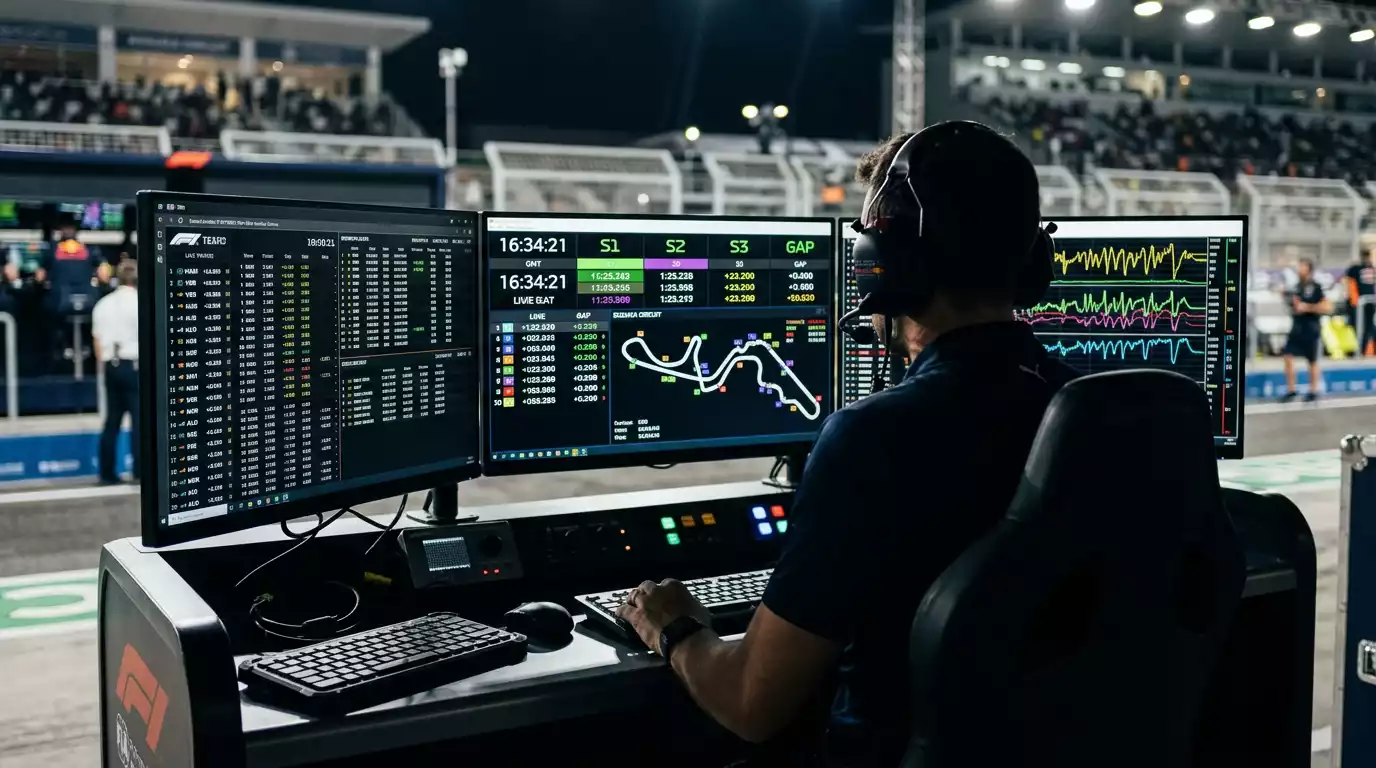
For race outcome betting, the critical number is fuel-corrected long-run pace from FP2. Teams run race simulations with full fuel loads, and the lap times from these runs, adjusted for fuel weight, which drops roughly 0.1 seconds per lap as the car gets lighter – reveal the true competitive order more accurately than any single qualifying lap. The raw times are published live on the FIA timing app and aggregated by several free analytics sites within minutes of the session ending.
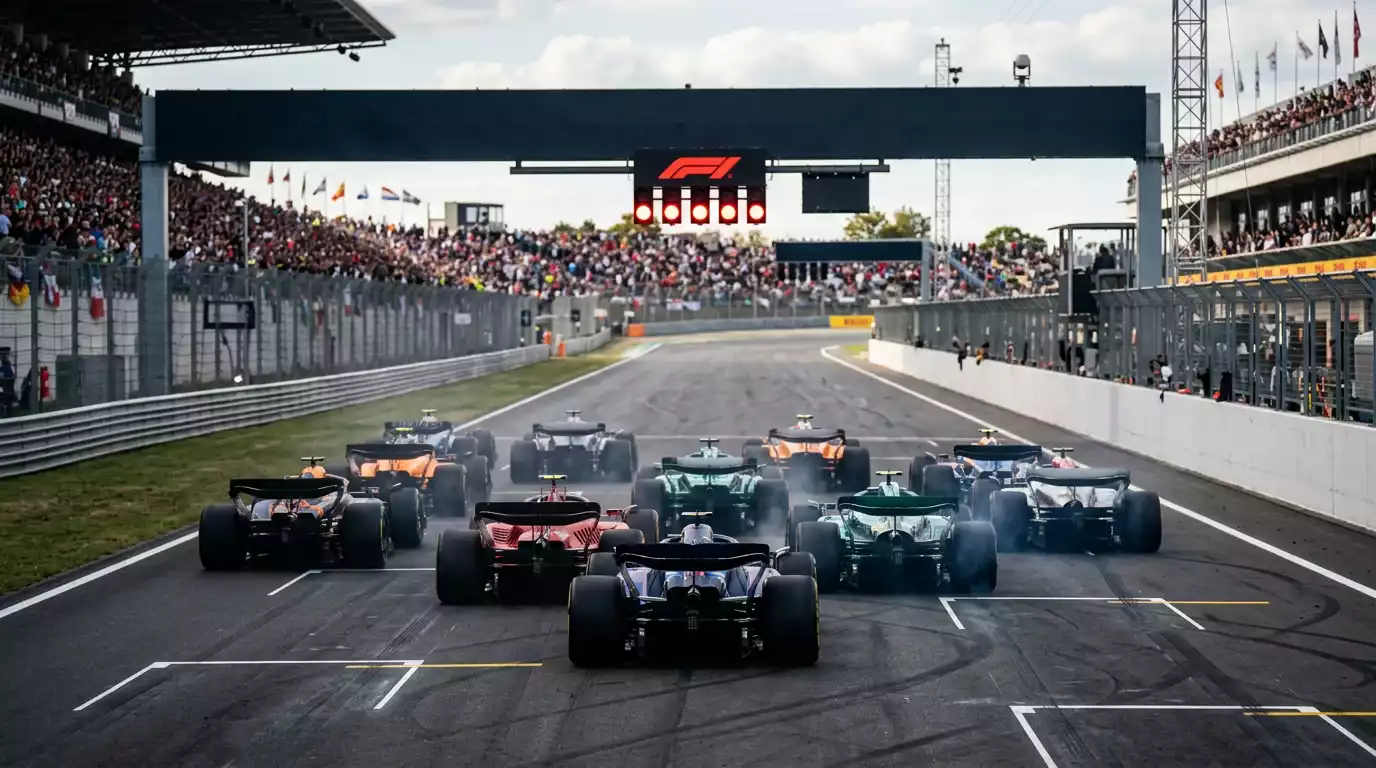
Qualifying pace matters most for markets directly tied to grid position: pole position bets, of course, but also race winner bets at circuits where overtaking is difficult. Grid-to-podium conversion rates vary dramatically by track. At Monaco, the pole-sitter has won roughly 40% of races over the last decade. At circuits with long straights and effective DRS zones (Monza, Spa, Jeddah), grid position matters far less, and race pace becomes the dominant factor.
My workflow is simple. After FP2 on Friday: extract the long-run averages, correct for fuel, rank the drivers. After qualifying on Saturday: note how the grid compares to the FP2 race pace ranking. Any significant discrepancy, such as a driver with strong race pace but a poor grid position, is a potential value bet in podium finish or head-to-head markets. The detail of this process is covered in the qualifying data section further on for anyone who wants to go deeper into the methodology.
One thing I have learned to guard against: treating FP1 data with the same weight as FP2. Teams use FP1 for aero correlation tests, setup experiments, and young driver running. The lap times in FP1 are distorted by these factors and often bear little resemblance to genuine race pace. I log FP1 times for reference but never base a bet on them. FP3 is useful primarily as a qualifying preview: the short runs on low fuel give you a read on who is likely to fight for pole, but they tell you almost nothing about race pace because the runs are too short and the fuel loads too low.
Track Categorisation: Street Circuits vs Permanent Venues
Not all circuits are created equal, and treating them as interchangeable is one of the fastest ways to leak money. I categorise every track on the F1 calendar into three buckets, and each bucket demands a different betting approach.
High-downforce permanent circuits (Barcelona, Hungaroring, Suzuka) reward cars with strong aerodynamic efficiency and mechanical grip. The competitive order at these tracks is relatively stable and predictable. If a team is fast at Barcelona testing, they will likely be fast at Suzuka. Favourites perform to expectations more often, and the odds tend to be accurate. My edge at these circuits is smaller, and I bet more conservatively, favouring head-to-head markets where the better car reliably prevails.
Low-downforce power circuits (Monza, Spa, Jeddah) emphasise straight-line speed and engine performance. These tracks can reshuffle the pecking order because a team with a strong power unit but mediocre aerodynamics suddenly has an advantage. The betting value here is in identifying which teams gain the most from the circuit characteristics. A midfield team with a powerful engine might be offered at 10/1 for a podium at Monza when their true probability is closer to 15% – though still unlikely, significantly underpriced.
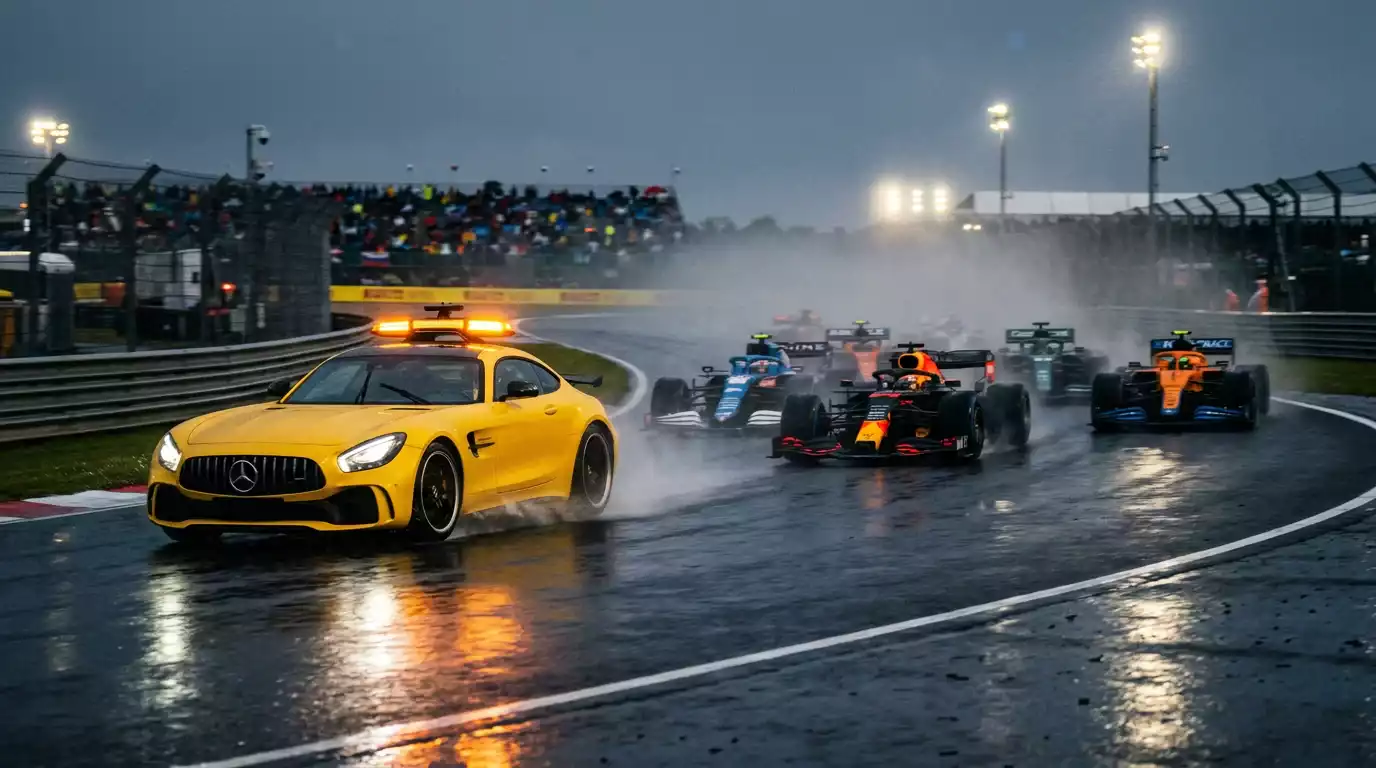
Street circuits (Monaco, Baku, Singapore, Las Vegas) are the wild cards. Narrow streets, concrete walls, and limited run-off create a higher probability of safety cars, red flags, and driver errors. The competitive order is less predictable, retirements are more frequent, and longer-odds outcomes occur more often. Street circuits are where I increase my staking on podium finish bets for midfield drivers and on “yes” bets for safety car deployment. The chaos premium is real, and bookmakers systematically underestimate it.
Within each category, individual track characteristics matter too. Bahrain’s surface is abrasive and chews through tyres, making tyre management a decisive factor. The Mexico City altitude robs engines of power and reduces aerodynamic downforce, compressing the field. Each circuit has quirks, and building a track-by-track database of your own observations – even just in a simple spreadsheet – will pay dividends over multiple seasons.
How Tyre Choices Factor Into Pre-Race Analysis
Tyre strategy is the invisible hand of F1 race outcomes, and most bettors ignore it completely. A driver can start a race from sixth on the grid and finish on the podium purely because their team nailed the tyre strategy while rivals stumbled.
Pirelli brings three dry-weather compounds to each race: soft (fastest but shortest-lived), medium, and hard (slowest but most durable). The performance gaps between compounds, and the degradation rates on each, vary significantly by circuit. At tracks with high lateral loads and abrasive surfaces (Barcelona, Silverstone), the soft compound can degrade within ten laps, making it a qualifying tyre rather than a race tyre. At smoother circuits like Sochi and Abu Dhabi, the soft can last twenty laps comfortably.
The strategic implications for betting are direct. If the degradation spread between compounds is large, strategy becomes the dominant factor. An aggressive undercut (pitting one lap earlier than a rival to gain track position on fresh tyres) can gain three or four seconds. When compound performance is close together, strategy matters less and raw pace dominates. Friday practice data reveals these degradation rates before the bookmakers have fully priced them in.
I pay particular attention to teams that tend to run contrarian strategies. Some outfits consistently choose the alternative tyre compound at the start (mediums when everyone else is on softs, for example), betting on a longer first stint and a speed advantage later in the race. When that strategic gamble pays off, it creates unexpected podium finishes and head-to-head upsets that the pre-race odds did not account for.
Expected Value: The Formula Behind Every Good Bet
Expected value is the concept that separates betting from gambling. Every bet has an expected value: the average amount you would win or lose per pound wagered if you placed the same bet thousands of times. A positive expected value means the bet is worth taking in the long run, regardless of whether it wins on any individual occasion.
The formula: EV = (probability of winning x profit if you win) – (probability of losing x stake). If a driver is priced at 4.00 decimal (3/1) and your analysis says they have a 30% chance of winning, then EV = (0.30 x 3) – (0.70 x 1) = 0.90 – 0.70 = +0.20. That is a positive expected value of 20p per pound staked. Over 100 such bets at a pound each, you would expect to profit roughly twenty pounds.
The hard part, obviously, is estimating the “true” probability accurately. No model is perfect. But you do not need perfection; you need to be more accurate than the bookmaker more often than not. ALT Sports Data, F1’s official betting data supplier since February 2025, is building real-time predictive analytics tools for exactly this purpose. Todd Ballard, the company’s co-founder, has described F1 as having “an unmatched combination of speed, strategy, and innovation” that makes it uniquely suited to data-driven betting models. As these tools reach the consumer market, the bar for sophisticated analysis will rise – but for now, even a simple model built on qualifying pace, track categorisation, and historical conversion rates will outperform gut instinct.
I track the expected value of every bet I place in a spreadsheet. Over a season, the cumulative EV of my selections is the clearest indicator of whether my analytical process is working, independent of short-term variance. A losing month with positive cumulative EV is not a failure; it is variance. A winning month with negative EV is luck, not skill. The spreadsheet keeps me honest.
One important nuance for F1: because the sample size per season is small (24 races, perhaps 50-80 individual bets), variance is higher than in sports with daily events. A football bettor might place 500 bets in a season and have a clear picture of their edge by March. An F1 bettor needs at least two full seasons before the signal emerges reliably from the noise. Patience is part of the strategy.
Where do the biggest EV gaps appear in practice? In my experience, two scenarios consistently produce mispriced odds. The first is a regulation-change season – like 2026 – where the competitive order is reshuffled and bookmakers are pricing based on outdated assumptions about team strength. The second is at circuits with unusual characteristics that most models handle poorly: high altitude, extreme heat, or newly resurfaced tarmac. Both scenarios create uncertainty, and uncertainty is where bookmaker pricing is weakest.
Building a Season-Long Betting Approach
Treating each race as an isolated event is like evaluating a stock based on a single day’s price movement. The season is the unit of analysis, and the most consistent profits come from strategies that compound over 24 race weekends.
My season-long approach has three pillars. First, allocate a fixed bankroll for the entire season before Round 1. I use a unit-based system, typically 100 units for the season, with no single bet exceeding 3 units. A proper F1 bankroll management framework prevents the temptation to “size up” after a good weekend or chase losses after a bad one. YouGov data shows that 31% of motorsport bettors spend more than $100 per month on betting and fantasy combined – higher than NFL, NBA, and football bettors. That level of spending demands discipline, and fixed seasonal bankrolls provide it.
Second, specialise in two or three markets and stick with them. Spreading across every available market dilutes your attention and makes it impossible to track whether your edge is real or imagined. I focus on head-to-head matchups and podium finish bets as my core markets, with occasional championship outright positions when the pricing is clearly off.
Third, review and adjust quarterly. After every six races, I audit my results by market, by circuit type, and by selection method. If head-to-heads are profitable but podium bets are not, I shift more of my allocation toward head-to-heads. The data from the first quarter of the season informs the approach for the second quarter, and so on. Motorsport bettors in the 18-34 age bracket – 58% of the betting demographic, per YouGov – tend to be comfortable with data-driven iteration. If that describes you, lean into it.
Pitfalls of Ignoring Your Strategy
The most expensive lesson I have learned in nine years of F1 betting had nothing to do with a bad selection. It was abandoning a strategy that was working because of two consecutive losses. The strategy was sound – positive expected value, verified by three seasons of data – but two losing weekends in a row shook my confidence, and I pivoted to something untested. That pivot cost me more than the two losses combined.
Strategy abandonment after short losing streaks is the most common mistake among serious F1 bettors. With only 24 races per season, losing streaks of three or four races are statistically normal even with a genuine edge. The expected variance in F1 betting is higher than in sports with more frequent events, and accepting that variance is part of the strategy itself.
The second pitfall is recency bias – overweighting the most recent race result when pricing the next one. A driver who won at Monza is not automatically the favourite for Singapore. The circuits demand completely different car characteristics, and form from one race transfers imperfectly to the next. I deliberately introduce a one-day gap between watching a race and doing my analysis for the following weekend, specifically to let the emotional residue of the previous result dissipate.
The third: overcomplicating accumulator legs. Adding a fourth or fifth selection to a multi-bet because the combined odds “look juicy” is a trap. Each additional leg multiplies the probability of one selection failing, and the bookmaker’s margin compounds with each leg too. Three well-researched legs will outperform five loosely considered ones over a season, every time.
Knowing When Not to Bet
The best bet I place most weekends is no bet at all. That sounds counterintuitive in a guide about betting strategy, but discipline means recognising when the edge is not there – and walking away.
There are specific race weekends where I deliberately reduce or eliminate my activity. Opening races at brand-new circuits, where there is no historical data on tyre degradation, safety car probability, or overtaking frequency. Sprint weekends where the compressed schedule disrupts normal practice data collection. And any race where the dominant driver is priced so short that the entire market is squeezed – if the favourite is at 1/5 and every other price is inflated to compensate, the value is thin across the board.
The F1 Global Fan Survey found that 90% of fans report emotional involvement in race outcomes. That emotional engagement is what makes F1 compelling, but it is also the enemy of disciplined betting. If you feel compelled to bet because “it’s race day” rather than because your analysis has identified a genuine edge, the bet is entertainment, not strategy. There is nothing wrong with entertainment betting – but keep it in a separate mental and financial bucket from your analytical activity.
I sit out roughly six or seven races per season entirely. Those are the weekends where my model does not produce any positive expected value selections above my threshold. Sitting out feels uncomfortable, especially during a run of good results when confidence is high. But the willingness to pass on a race – to treat the season as 24 opportunities rather than 24 obligations – is what separates a sustainable approach from a depleted bankroll by October.
There is a practical test I run before every race weekend: if I cannot articulate, in one sentence, why a specific selection is mispriced, I do not bet. “Verstappen looks fast” is not a reason. “Verstappen’s FP2 long-run pace was 0.4 seconds faster than the field on the medium compound, but his race winner price has not shortened to reflect a grid penalty that will push his main rival to P5” – that is a reason. The specificity forces rigour, and rigour is the only reliable antidote to the emotional pull of a live Grand Prix. See also: discover the top F1 betting markets to apply your strategy.
Common Questions About F1 Betting Strategy
Is it better to bet on individual races or the full season championship?
Both have merit, but they demand different skills. Individual race betting offers more frequent feedback and lets you apply circuit-specific analysis. Championship outrights reward longer-term assessment of team development trajectories and driver consistency. I split roughly 70/30 in favour of race-day markets because the data available each weekend – practice pace, qualifying results, weather – provides a clearer analytical framework than pre-season speculation about car performance.
How much of an edge can qualifying data give you in F1 betting?
Significant, but context-dependent. Fuel-corrected long-run pace from FP2 is the single most predictive data point available to non-professional bettors. Combined with track categorisation and historical grid-to-finish conversion rates, it can identify mispriced selections in podium and head-to-head markets. The edge is largest at circuits where race pace and qualifying pace diverge – high-degradation tracks where tyre management matters more than single-lap speed.
Should I specialise in one F1 market or spread across many?
Specialise. Two or three markets maximum. Spreading across every available market dilutes your analytical attention and makes it impossible to isolate where your edge actually comes from. Head-to-head matchups and podium finish bets are strong starting points because they reward the type of analysis – race pace, tyre strategy, team form – that publicly available data supports well.
How many races does it take to assess a new F1 season’s betting patterns?
Four to six races typically provide enough data to establish the competitive order and identify which teams have genuinely strong cars versus those who benefited from early-season circuit characteristics. I use the first three races as a data-gathering period with reduced staking, then increase activity from Round 4 onwards once the patterns become clearer. Full confidence in a season’s betting model usually arrives around the summer break after ten or eleven races.
Prepared by the f1 Betting Guide editorial staff.