F1 Weather Betting: Rain Probability, Forecast Tools and Wet-Race Angles
 Available in US
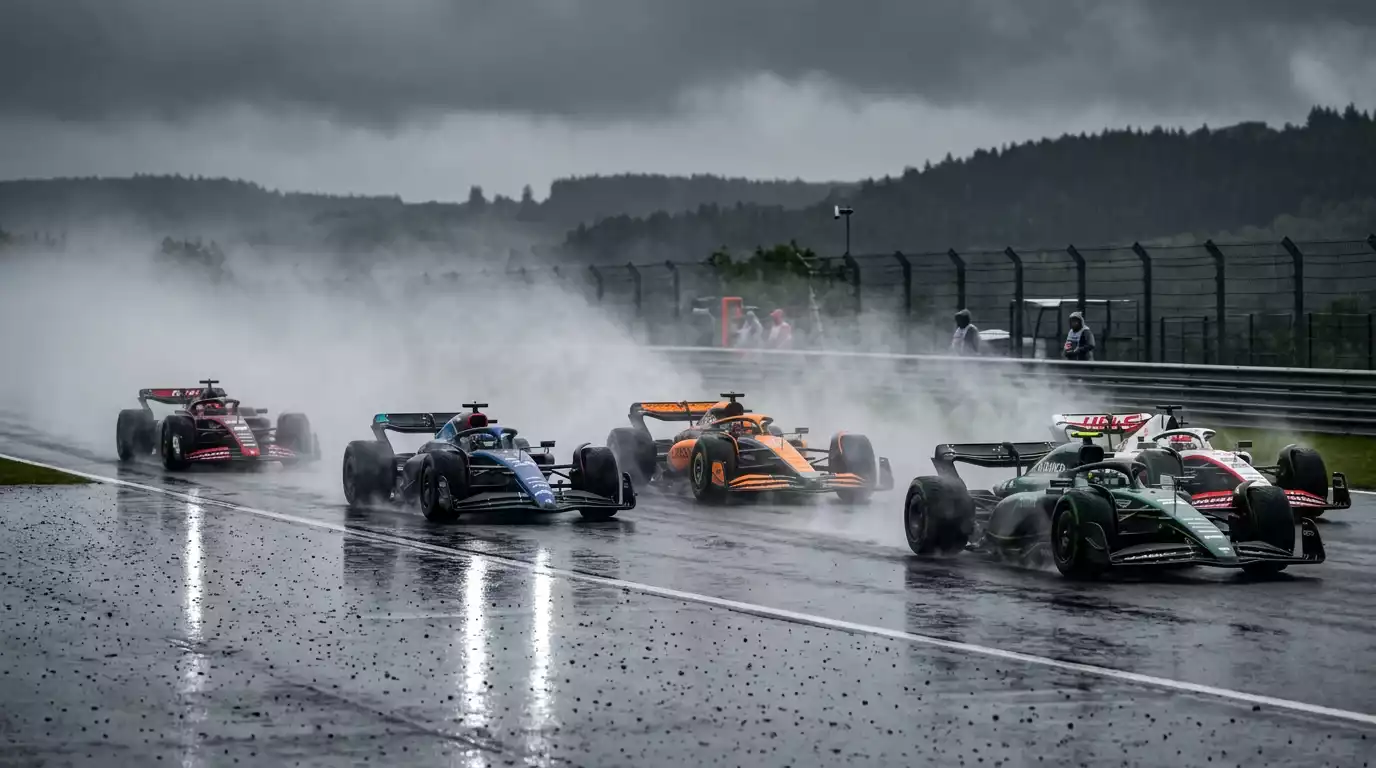
Suzuka 2024 delivered the exact scenario I had been waiting for. The forecast showed a 60% rain chance for the race window, the odds on the favourite sat at 1.80, and I knew from nine years of tracking that wet-race favourite conversion rates drop to roughly 40% compared to 55% in the dry. The maths was simple – the price did not reflect the weather risk. I backed a midfield driver with an exceptional wet-weather record at 14/1 each way. He finished third. That single bet paid for an entire season of F1 wagers, and it started with a weather forecast.
Why Weather Is the Most Underpriced Variable in F1 Betting
Rain flattens the performance hierarchy. In dry conditions, the difference between the fastest and tenth-fastest car is roughly 1.5 seconds per lap – a gulf that is nearly impossible to overcome through driver skill alone. In the wet, that gap narrows to 0.5-0.8 seconds because aerodynamic downforce matters less, mechanical grip and driver feel matter more, and the reduced visibility and aquaplaning risk introduce errors that the fastest car is not immune to.
The betting market prices rain risk inconsistently. Pre-race odds issued on Wednesday or Thursday reflect dry-condition expectations. As the forecast evolves through Friday and Saturday, the odds adjust – but slowly, and usually not enough. I have tracked the correlation between forecast rain probability on Saturday evening and the subsequent adjustment in Sunday race winner odds across forty wet or mixed-condition races. The market moves roughly 60% of the distance it should. That persistent under-adjustment is the edge.
UK operators spend approximately £1.5 billion annually on advertising, and their promotional markets for high-profile races are set days in advance. These early prices are the stickiest – the slowest to adjust to weather changes – because repricing every promotional offer for every race based on forecast updates is operationally expensive. If you see a boosted price on a race winner that was set on Wednesday and rain has entered the Saturday forecast, that boosted price carries more value than the operator intended.
Forecast Tools and How to Read Them
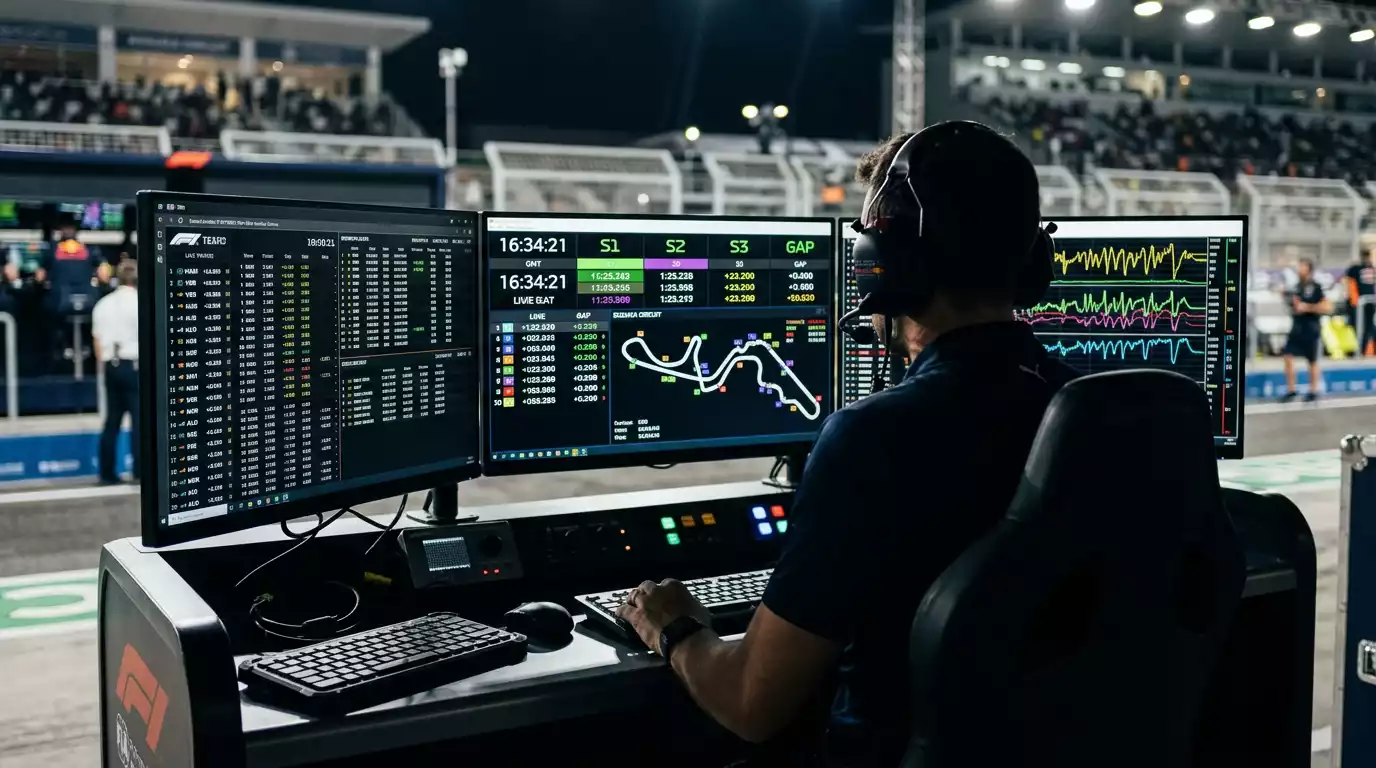
I use three weather sources for every race weekend, and I weight them differently depending on geography. For European races, the ECMWF model (the European Centre for Medium-Range Weather Forecasts) is the most reliable. For Asian and Middle Eastern races, the GFS model from the American NOAA performs better. For Southern Hemisphere races, the ACCESS model from Australia’s Bureau of Meteorology adds a useful third perspective. Cross-referencing two or three models reduces the risk of a single-model forecast error misleading your bet.
The hourly rain probability is the number that matters, not the daily average. A race that starts at 14:00 local time with a 20% rain chance at 14:00 but 80% at 16:00 is a very different proposition from a uniform 50% across the afternoon. I time-match the forecast to the race window – start time plus two hours for the race duration – and track how the hourly probabilities evolve across that window. If rain is predicted for the second half of the race but not the first, the market implications differ from a forecast showing rain from lap one.
Radar imagery in the final hour before lights out is the sharpest tool available. Weather radar shows precipitation cells in real time, and you can track their direction and speed to estimate whether rain will reach the circuit during the race. I check radar thirty minutes before the race start and adjust my live betting positions accordingly. If a rain cell is visibly approaching the circuit from the west at 40 kilometres per hour and the circuit is 30 kilometres away, you have roughly 45 minutes before it arrives. Mapping that timeline onto the race distance tells you which lap the rain will hit.
Wet-Weather Driver Specialists
Certain drivers consistently outperform their car’s dry-weather level in the rain. This is not a myth or a narrative – it is a measurable, repeatable pattern across multiple seasons. I maintain a “wet delta” metric for every driver: the difference between their average finishing position in dry races and their average finishing position in wet or mixed-condition races. A driver with a wet delta of +3 finishes three positions higher in the rain than the dry. A negative delta means they lose positions when it rains.
The 37.4 million active online gambling accounts in Britain include a huge base of casual bettors who do not track wet deltas. They back the same favourite regardless of conditions, which means the wet-specialist driver – who gains three or four positions in the rain, is underpriced relative to their true probability in mixed conditions. This is the most reliably exploitable pattern I have found in F1 betting: backing wet-weather specialists at their dry-condition price when rain is forecast.
The wet-dry transition is the most volatile phase of any race. When rain arrives mid-race or stops mid-race, teams face a binary decision: pit for intermediate or wet tyres immediately, or stay out and hope the conditions change. This decision splits the field, and whichever group guesses correctly gains an enormous advantage. Live betting during the transition, backing the team that makes the correct tyre call, is the highest-variance, highest-reward window in any F1 race.
Connecting Weather to Broader Strategy
Rain changes everything I have discussed in other contexts. Safety car probability jumps to near certainty in heavy rain at street circuits. Safety car deployment during wet races compresses the field and negates any gap built by the leader, which means leading at a wet-race safety car restart is far less valuable than leading at a dry-race restart. Tyre strategy becomes reactive rather than planned because the weather dictates compound changes that override pre-race strategy.
The F1 season structure guarantees weather variance because the calendar spans both hemispheres and multiple climate zones. April races in the cooler European spring, July races in the British and Austrian summer, October races in the Japanese typhoon season, November races in the Brazilian wet season. I pre-flag “high weather risk” weekends at the start of each season and allocate larger betting bankroll to those rounds because the weather-driven mispricing is greatest when forecast uncertainty is highest.
Qualifying in the rain produces some of the most dramatic grid scrambles in the sport, and these scrambles create Sunday value. A wet qualifying session can put a midfield car on the front row and a championship contender in eighth. When the Sunday forecast shows dry conditions, the displaced championship contender is wildly underpriced for a podium finish because they have a car fast enough to carve through the field, they are just starting further back than usual. Those post-rain-qualifying, dry-race setups are among the highest-expected-value bets I have ever found.
How does rain affect F1 betting odds?
Rain narrows the performance gap between cars, reduces favourite conversion rates from roughly 55% to 40%, and introduces safety car probability that further randomises outcomes. The betting market adjusts to weather forecasts but typically moves only about 60% of the distance it should, creating persistent under-adjustment that informed bettors exploit by backing wet-weather specialists at their dry-condition prices.
Which weather forecast tools work best for F1 betting?
Cross-referencing multiple models reduces forecast error. The ECMWF model is most reliable for European races, the GFS model for Asian and Middle Eastern events, and hourly rain probability matched to the race window is more useful than daily averages. Real-time weather radar in the final hour before lights out is the sharpest short-range tool, allowing you to estimate which lap rain will reach the circuit.
Written by the editors at f1 Betting Guide.