F1 Bet Builder: How to Create Custom Bets on Grand Prix Weekends
 Available in US
The first time I used a bet builder on an F1 race, I thought I had discovered a cheat code. I combined a head-to-head driver matchup, a fastest lap selection and a “both cars to finish” constructor bet into a single wager with a combined price that looked absurdly generous. It lost, of course – a lap-one puncture took out one of my constructor selections. But the experience hooked me on the format, because for the first time I could express a multi-layered opinion about a Grand Prix in a single bet rather than placing three separate slips. Nine years later, bet builders are one of the most powerful tools available to F1 bettors who know how to use them. See also: f1 betting guide for creative multi-bet strategies.
What Is a Bet Builder in F1?
A standard accumulator pulls selections from different events – say, the winner of three separate Grands Prix. A bet builder pulls multiple selections from the same event and combines them into one bet. The operator’s algorithm calculates a combined price based on the individual odds and the estimated correlation between your selections. That correlation adjustment is where the real action is.
In football, bet builders have been mainstream for years. Player to score, team to win, over 2.5 goals – all from the same match. F1 is catching up. ALT Sports Data’s appointment as F1’s official betting data supplier in February 2025 has accelerated the range of granular in-race markets that operators can offer. As real-time predictive analytics expand, the menu of available bet builder selections grows with them.
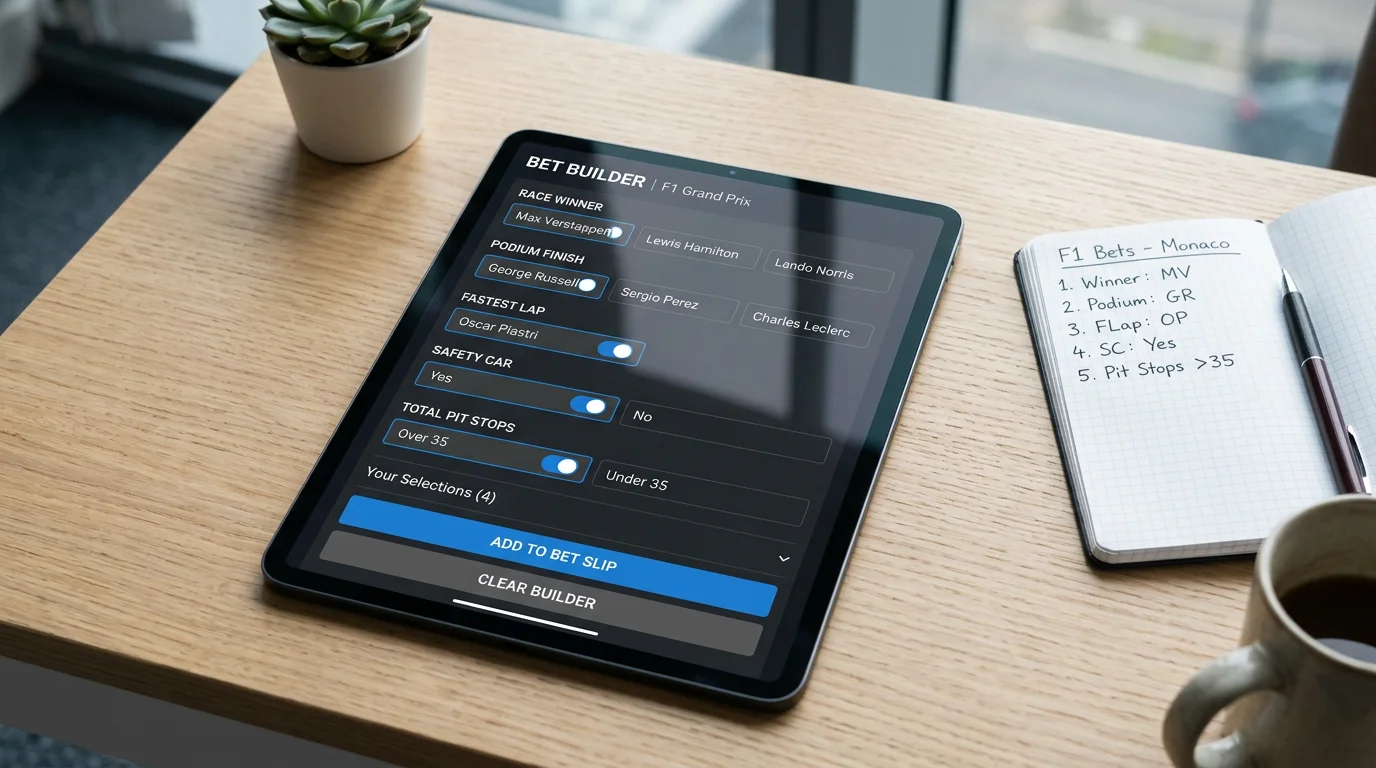
The mechanics are simple on the surface. You open the bet builder feature, select your race, browse available markets, add your choices to the slip, and the system generates a combined price. That price accounts for how your selections interact – backing the same driver to win and to set the fastest lap will be priced with heavy positive correlation, because a winning driver is more likely to pit for fresh tyres and chase the fastest lap point. Two unrelated selections from different parts of the grid will be priced with much less correlation adjustment.
Not every market is available in bet builders. Most operators offer race winner, podium finish, points finish, head-to-head matchups, fastest lap and constructor-based markets. Fewer include qualifying-specific or sprint-race selections, though this is expanding as data infrastructure improves.
Which Selections Can You Combine?
This is where most casual bettors make their first mistake. They pick selections they find interesting without considering whether those selections are structurally independent. Three selections that all depend on the same car performing perfectly are not a three-leg bet – they are one bet with three failure points.
High-independence combinations to consider: a head-to-head between two midfield drivers paired with a race winner from the front of the grid. These outcomes are largely independent – the midfield battle rarely affects who crosses the line first. Adding a “safety car at any point” market (where available) introduces a third variable that is driven by on-track incidents rather than pure pace, giving you genuine diversification within a single race.
The correlation between bookmaker odds and market-implied probabilities in F1 sits at 0.95, per Sparkco.ai data. That tightness means the algorithm pricing your bet builder is working with sharp underlying numbers. If you combine two heavily correlated selections – say, a driver to win and the same driver’s team to lead the constructors’ standings after the race – the algorithm will discount your combined price aggressively to reflect the near-certainty that one outcome follows from the other. You end up with a worse price than placing the bets separately.
The sweet spot is two to three selections from different grid segments. A front-runner outcome, a midfield matchup and a grid-wide proposition (fastest lap, total retirements, safety car yes/no). This structure gives the algorithm less correlation to price in, which translates to a more generous combined price relative to the individual markets.
Building a Bet Builder With a Strategy
I build my bet builders on Friday evenings, after FP1 and FP2 data is available but before qualifying reshuffles the grid. Practice session long-run pace tells you which cars have genuine race-day speed versus one-lap qualifying pace. A driver who tops FP2 on the medium compound with consistent sector times is a stronger bet builder candidate than one who set a flashy time on softs with a tow.
Start with your highest-confidence selection. This is your anchor leg – the outcome you would bet on independently even without the bet builder format. Build around it with selections that add value without adding correlated risk. If your anchor is a race winner pick, your second leg should come from a completely different part of the field. A head-to-head between two drivers fighting for 8th and 9th is unlikely to correlate with who wins the race.
Price comparison matters more in bet builders than in single bets, because the correlation algorithms differ between operators. The same three-selection combination can produce meaningfully different prices at two different bookmakers. I routinely check two or three bet builder prices before placing, and the variance surprises me every time, sometimes as much as 15-20% on the combined odds.
One underused approach: build your bet builder to target a specific race narrative. If the weather forecast shows a 60% chance of rain from lap 15 onwards, build around outcomes that rain favours, a midfield driver on the podium, a head-to-head favouring the driver with better wet-weather history, and a safety car deployment. The guide to F1 accumulator strategy covers the correlation logic in more detail, and the same principles apply here within a single race.
Bet Builder Mistakes to Avoid
The most expensive mistake is treating the bet builder as an entertainment product rather than a strategic tool. Adding a fourth or fifth leg because the combined price “looks good” is the fastest way to destroy your edge. Each additional selection does not just add risk, it multiplies the operator’s margin, because the correlation algorithm charges you for uncertainty in ways that are difficult to audit from the outside.
Backing a driver to win and to set the fastest lap is a classic trap. These outcomes are positively correlated, the winner often pits late for fresh tyres specifically to grab the fastest lap point. The algorithm knows this and prices the combination at far less than the product of the individual odds. You are paying for two outcomes that frequently co-occur as though they were semi-independent. A standalone fastest lap bet alongside a separate race winner bet would give you better total returns in most cases.
Ignoring settlement rules is another common error. Bet builder legs that involve a driver who retires can be voided or settled as losers depending on the operator and the specific market. If one leg of your bet builder is voided, the remaining legs recalculate at a lower combined price, which might still lose even if the other selections land. Check how the operator handles DNFs within bet builders before you commit, because the treatment is not standardised across the industry.
Finally, do not chase complexity for its own sake. A two-leg bet builder with two high-confidence, low-correlation selections will outperform a four-leg special built on guesswork over any meaningful sample. Discipline in selection count is the single most important variable in long-term bet builder profitability. See also: protect your stake with solid F1 bankroll management principles.
Which UK bookmakers offer F1 bet builder?
Most major UK-licensed operators now include F1 in their bet builder products, though the range of available markets varies. Some limit F1 bet builders to race winner, podium and head-to-head markets, while others include fastest lap, points finish and constructor bets. Check the bet builder section on race weekends, as operators sometimes expand their F1 menu for headline events like Silverstone or Monaco.
Can I cash out an F1 bet builder?
Cash-out availability on F1 bet builders depends on the operator and the specific markets included. Many bookmakers offer partial or full cash-out on bet builders during the race, but the feature can be suspended during safety car periods or other high-volatility moments when odds are shifting rapidly. If cash-out flexibility matters to your strategy, verify the operator’s policy before building your bet.
Created by the ”f1 Betting Guide” editorial team.