
F1 Constructors Championship Betting: Team Valuations, Budget Gaps and Outright Angles
 Available in US
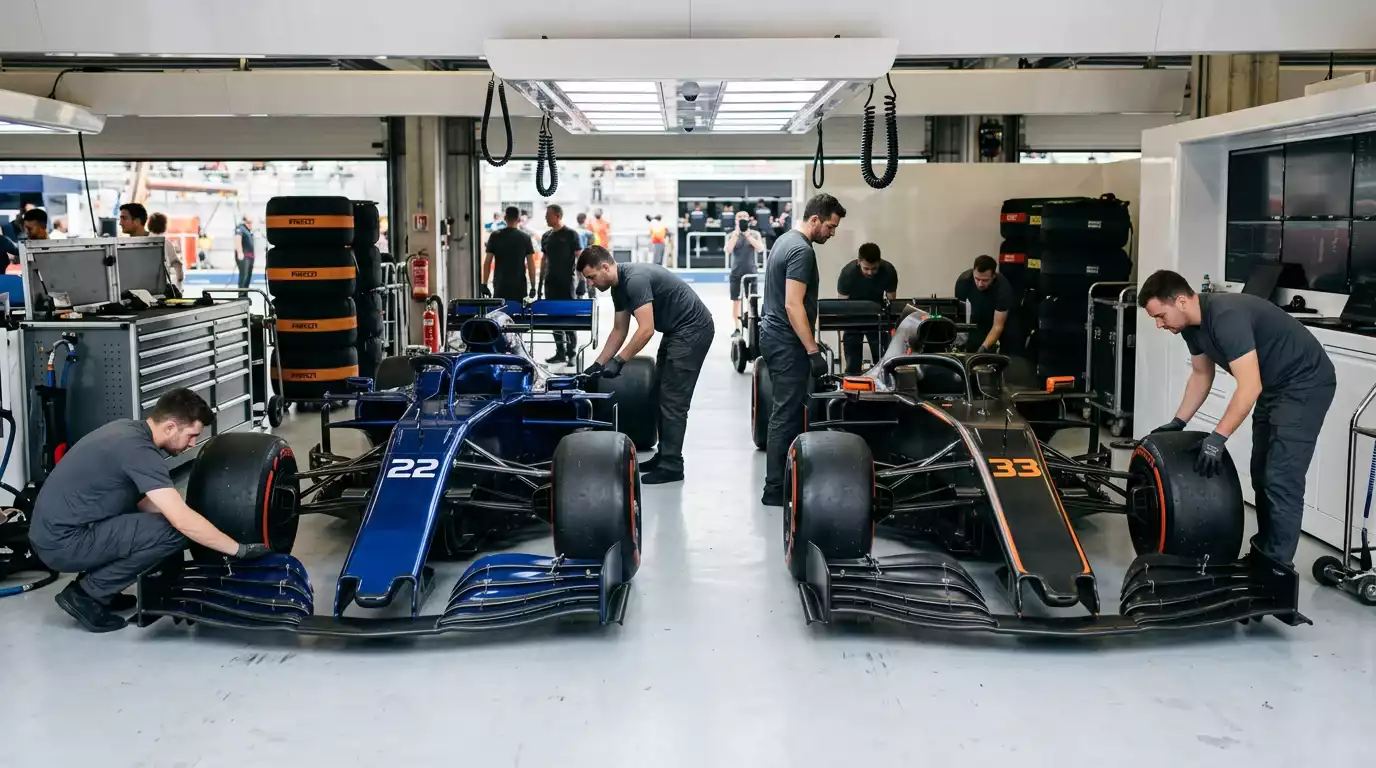
Most punters fixate on the Drivers Championship and ignore the Constructors entirely. I did the same for years – until I realised that the team title market is thinner, slower to adjust and far more exploitable. The reason is structural: casual bettors back drivers they like, while the Constructors market demands an understanding of team resources, car development trajectories and the combined output of two drivers rather than one. That extra layer of complexity thins the crowd, and thin crowds create opportunities.
Why the Constructors Market Behaves Differently
I spent a full season in 2023 tracking how quickly bookmakers adjusted Constructors Championship odds after each race versus how quickly they moved the Drivers prices. The pattern was consistent: driver odds shifted within hours of a race finish, while Constructors prices lagged by a day or more. The average F1 team is now valued at $3.42 billion, and that financial muscle translates into development spending that determines the second half of every season. Understanding which teams have budget left to deploy after the summer break is worth more than any qualifying lap time.
Two drivers contribute points in the Constructors standings, which creates a smoothing effect. A single bad weekend from one driver matters less when their teammate scores. This reliability factor means the Constructors market is less volatile race-to-race, which suits bettors who prefer slower-burning, higher-conviction positions rather than the coin-flip nature of individual race winners.
The 2026 regulations reset everything – new cars, new aerodynamic rules, new power units. Historical performance hierarchies carry less predictive weight into a regulation change year than they do in a stable-rules season. I factor this into pre-season pricing by treating the Constructors market as closer to a fresh start, weighting factory team resources and power unit supplier advantages above prior-season finishing order.
Budget Caps and Development Races
The cost cap changed how I evaluate Constructors bets fundamentally. Before the cap, the richest teams simply outspent everyone else, and the Constructors Championship was predictable. Now, every team operates under the same spending ceiling, but not every team spends efficiently. Some teams front-load their development budget into the first half of the season and run out of upgrade capacity by autumn. Others – and this is the pattern I watch for – hold budget back and introduce a major upgrade package after the summer break when their rivals have exhausted their allocation.
Spotting a team that is sandbagging its development pace in the first ten races and then surging in the final fourteen is the single most profitable angle in the Constructors market. The odds at mid-season reflect the current standings, not the development trajectory. If a team sits fourth in the Constructors table but you know they have a significant upgrade planned for Monza, their mid-season price will be longer than their true probability warrants.
The UK Gambling Commission reported 37.4 million active online gambling accounts in Britain – a 24% increase that reflects a broadening market. More accounts mean more recreational money flowing into F1 markets, and recreational money overwhelmingly follows current form rather than future development curves. That asymmetry between where the money goes and where the value sits is exactly why Constructors futures reward patient bettors.
Reading the Two-Driver Dynamic
Last season I backed a midfield team for a top-three Constructors finish based on one observation: both their drivers were finishing consistently inside the points. Their rivals in the standings had one strong driver and one who kept retiring or finishing outside the top ten. Over a full season, that consistency gap compounded into a forty-point swing – enough to change a Constructors position by two places.
When I assess a Constructors bet, I model each driver’s expected points per race and multiply by the remaining number of races. A team with two drivers averaging twelve points per race combined will outscore a team with one driver averaging nine and the other averaging five, even though the second team has the higher-scoring individual driver. The maths favours depth over peaks, and the market tends to overweight the star driver’s contribution while underweighting the number two’s reliability.
Driver changes mid-season or between seasons create specific pricing opportunities. When a team replaces a struggling second driver with a faster option, the Constructors odds react – but usually not enough. The incoming driver’s ceiling is discounted because they lack track familiarity, which means the market underprices the team’s second-half improvement potential.
Regulation Changes and the 2026 Reset
Every major regulation change in F1 history has reshuffled the Constructors order. The 2014 turbo-hybrid switch saw Mercedes leap from fourth to first. The 2022 ground-effect rules helped Ferrari close the gap before McLaren emerged as the surprise package. The F1 Global Fan Survey showed 90% of fans feel emotionally engaged with the sport – that engagement peaks during regulation resets when the competitive order is genuinely uncertain, and the betting markets reflect that uncertainty through wider spreads between contenders.
For 2026, the new power unit regulations introduce a much larger electrical component, which means engine supplier quality matters more than it has in years. Teams with strong in-house power units – factory teams building their own engines, hold an advantage over customer teams running someone else’s hardware. When pricing Constructors futures before the season starts, I separate the grid into factory and customer teams first, then layer on aerodynamic and budget assessments within each group.
The pre-season testing period becomes the single most important data point for Constructors futures in a regulation year. One test session at Bahrain or Barcelona will reveal more about the competitive order than the entire previous season. I wait for test data before placing Constructors bets in regulation-change years, even though the best prices are available before testing begins. The information advantage of seeing actual lap times outweighs the price deterioration between pre-testing and post-testing odds.
Timing Your Constructors Bets Through the Season
The Betfair Exchange handled over £200 million in F1 exchange turnover in 2023, and a meaningful chunk of that flows through Constructors markets at three key moments: pre-season, the summer break and the final five races. Each window has different characteristics. Pre-season offers the widest prices but the least information. The summer break, when teams announce upgrade plans and driver contracts, offers the best balance between price and information. The final five races offer the most certainty but the narrowest margins.
I allocate my Constructors betting capital in a 20-50-30 split across those three windows. A small pre-season position on my highest-conviction pick, then the majority of my stake placed during the summer break once I can see team development trajectories clearly, then a final tranche in the closing races either to hedge or double down depending on how the standings have evolved.
Hedging a Constructors position is simpler than hedging a Drivers bet because the points gap between teams is usually smaller as a percentage of total points scored. A team trailing by thirty points with five races remaining needs roughly six extra points per weekend, achievable if their car upgrade works or if a rival suffers a reliability problem. That recovery probability is often higher than the odds imply, which means trailing teams at the mid-season mark frequently represent value.
Is the F1 Constructors Championship harder to predict than the Drivers?
The Constructors Championship is more stable race-to-race because two drivers contribute points, smoothing out individual bad weekends. Pre-season predictions are harder in regulation-change years, but the market’s slower adjustment speed creates more exploitable windows for informed bettors compared to the heavily-watched Drivers market.
When is the best time to bet on the F1 Constructors Championship?
The summer break offers the best risk-reward window. Pre-season prices are longest but carry the most uncertainty. By mid-season, you can see genuine car performance data and development trajectories, while the market still prices teams based partly on early-season form that may not persist. The final five races offer certainty but narrow margins.
How do regulation changes affect Constructors Championship betting?
Major regulation changes, like the 2026 power unit and aero overhaul, reset the competitive hierarchy. Factory teams with in-house power units tend to gain advantages in regulation years. Pre-season testing becomes the most important data source, and waiting for test lap times before betting provides an information edge that outweighs any price deterioration.
Published by the f1 Betting Guide team.