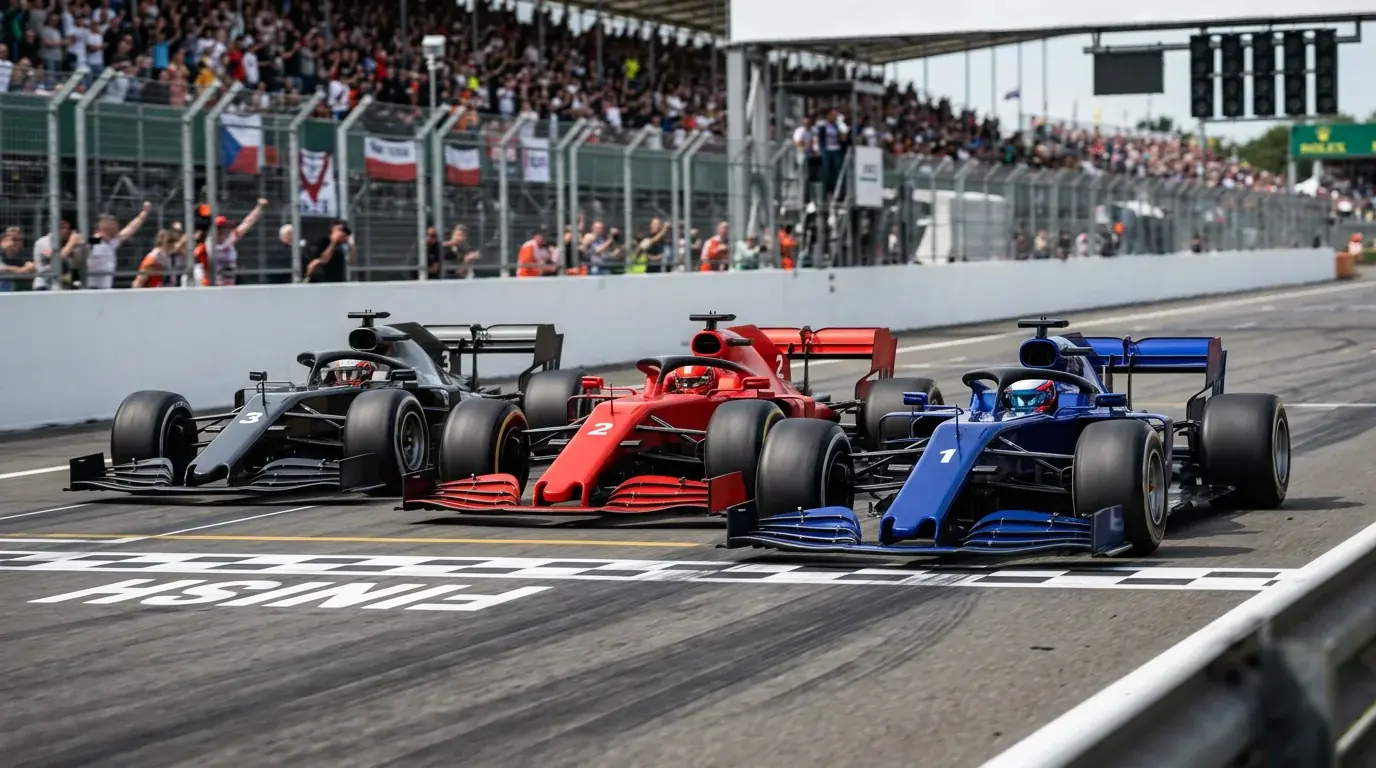
F1 Betting Guide
The Complete F1 Betting Guide: Markets, Odds and Strategy for UK Punters
 Available in US
Table of Contents
- The Numbers and Methods That Shape Every Section Below
- The F1 Betting Landscape in 2026
- How the F1 Season Works for Bettors
- F1 Betting Markets: A Complete Overview
- Understanding F1 Odds and Implied Probability
- Factors to Research Before Placing an F1 Bet
- A Data-Led Approach to F1 Betting
- F1 Betting and UK Regulation
- How the 2026 F1 Regulations Reshape Betting Markets
- Responsible Gambling: Tools and Limits
- Frequently Asked Questions About F1 Betting
By Motorsport Betting Analyst
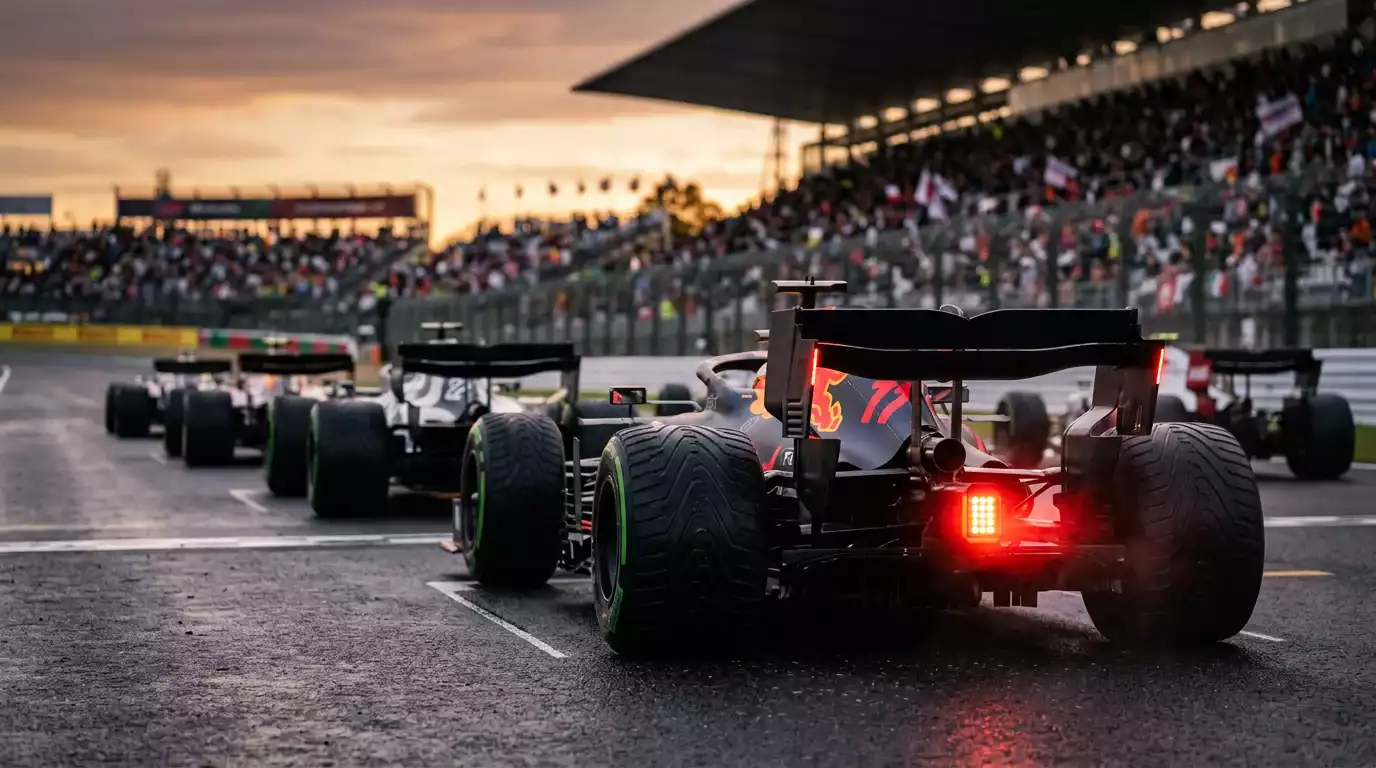
I placed my first F1 bet in 2017, a tenner on Daniel Ricciardo to win the Monaco Grand Prix. He was sitting at 7/1, and I knew precisely nothing about tyre degradation, pit window strategy, or how street circuits compress the field. He retired on lap 55 with a gearbox failure. Welcome to Formula 1 betting.
Nine years later, I’m still placing F1 bets, but the process looks nothing like that first punt. The sport has exploded. A global fanbase of 827 million people now follows the championship, per F1’s own season review, and cumulative TV viewership hit 1.83 billion across the 2025 season. Yet here’s the number that really matters if you’re reading this guide: F1 accounts for just 0.4% of the global sports betting handle. Jonny Haworth, F1’s Director of Commercial Partnerships, called it “pretty crazy for a sport the size of Formula One” – and he’s right. That gap between the audience and the betting volume is exactly where opportunity lives.
827 million
Global F1 fanbase in 2025, up 63% since 2018
0.4%
F1’s share of the global betting handle, a fraction of its audience size
£2.6 billion
UK remote betting GGY, per the Gambling Commission
28%
F1 fans who placed an online sports bet in the past 12 months, per YouGov
This guide is built for UK punters who want to move past guesswork. Whether you’ve never touched an F1 market or you’ve been dabbling for years without a system, I’m going to walk you through every major betting market, break down how odds actually work, and share the analytical framework I use to find value across a 24-race season. No affiliate rankings. No “trust me, this bookmaker is the best.” Just the data, the methods, and the strategic thinking that separates sharp betting from expensive entertainment.
The UK’s remote betting sector generated £2.6 billion in gross gambling yield last year, according to the Gambling Commission, and sports betting remains the largest segment of the online market. F1 sits inside that ecosystem, fully legal, fully regulated, and growing fast. But 28% of F1 fans have placed an online sports bet in the past year, while only 22% of those who bet actually wagered on motorsport, per YouGov data. That disconnect tells me most F1 fans haven’t found a compelling reason to bet on the sport they already watch obsessively. This guide aims to change that. With numbers, not hype.
The Numbers and Methods That Shape Every Section Below
- F1 commands 827 million fans but just 0.4% of the global betting handle – a mismatch that creates value for analytical bettors willing to do the work.
- The UK’s £2.6 billion remote betting market is fully regulated under the UKGC, and F1 betting is legal for anyone aged 18 or over with a licensed operator.
- Implied probability is your core tool: convert odds into percentages, compare them to your own data-driven assessment, and only bet when your number is higher.
- The 2026 regulation reset – 50% electric power units, new aero rules, lighter cars – has scrambled the competitive order and widened the value window for early-season bets.
- Bankroll management across a 24-race calendar matters more than any single pick. Set a seasonal budget, bet in units, and track every wager to build a genuine feedback loop.
The F1 Betting Landscape in 2026
Three years ago, if you told me Formula 1 would have an official betting partner, I’d have laughed. F1 was the sport that treated gambling like a distant cousin, acknowledged at family gatherings but never invited to dinner. That changed in March 2026 when Betway became the first Official Betting Operator in F1 history, covering Europe, the Middle East, Africa, Canada, and Mexico. A month later, FanDuel signed on as the first US and Canada Official Betting Operator. The floodgates didn’t just open. They were removed entirely.
Betway’s deal with F1 marks the first time in the sport’s 76-year history that a bookmaker holds an official partnership. Jonny Haworth, F1’s Director of Commercial Partnerships, described it as enabling “adult fans to take a step closer to the strategy and action” of the sport.
The commercial logic is straightforward. F1’s total revenue hit $4.48 billion in trailing twelve-month figures as of early 2026, with media rights generating around $1.2 billion and sponsorship bringing in roughly $850 million. Betting represents a largely untapped revenue stream. That fraction-of-a-percent share I mentioned earlier looks even more absurd when you consider the global sports betting market sits at approximately $133 billion in handle. The futures market for F1 drivers alone grew from $36 million in 2023 to $45 million in 2024, per Sparkco.ai’s championship prediction markets report – and that’s before the official partnerships kicked in.
F1 Group revenue reached $4.48 billion TTM to April 2026, with the average team valuation doubling to $3.42 billion since 2023. The commercial incentive to grow betting revenue is clear: every percentage point of the global handle that F1 captures represents hundreds of millions in additional industry activity.
What makes this moment genuinely different is the data infrastructure being built underneath. In February 2025, ALT Sports Data was appointed as F1’s Official Betting Data Supplier, tasked with developing real-time predictive analytics and priced odds drawn directly from F1’s own telemetry. Emily Prazer, F1’s Chief Commercial Officer, framed it as delivering “new and entertaining ways for audiences to engage with the sport.” In practice, it means the in-play betting experience for F1 is about to become radically more sophisticated, moving from simple “who wins the race” propositions to granular, data-driven markets that track pit stop probabilities, battle outcomes, and strategy calls in real time.
For UK punters, the timing is ideal. The regulated market here is mature, UKGC-licensed operators already offer F1 markets, and the sport’s audience in Britain stands at 16.7 million fans. The British Grand Prix alone drew 500,000 spectators across its weekend in 2025 – the highest single-event attendance of the season. You’re not betting on a niche sport. You’re betting on a global entertainment juggernaut that’s only just beginning to build its betting product.
How the F1 Season Works for Bettors
My first season of serious F1 betting taught me something obvious that I’d somehow missed: the championship calendar isn’t just a schedule. It’s the structure that determines which bets are available, when they’re priced, and how much information you have before committing money. Understanding this structure is the difference between betting and gambling.
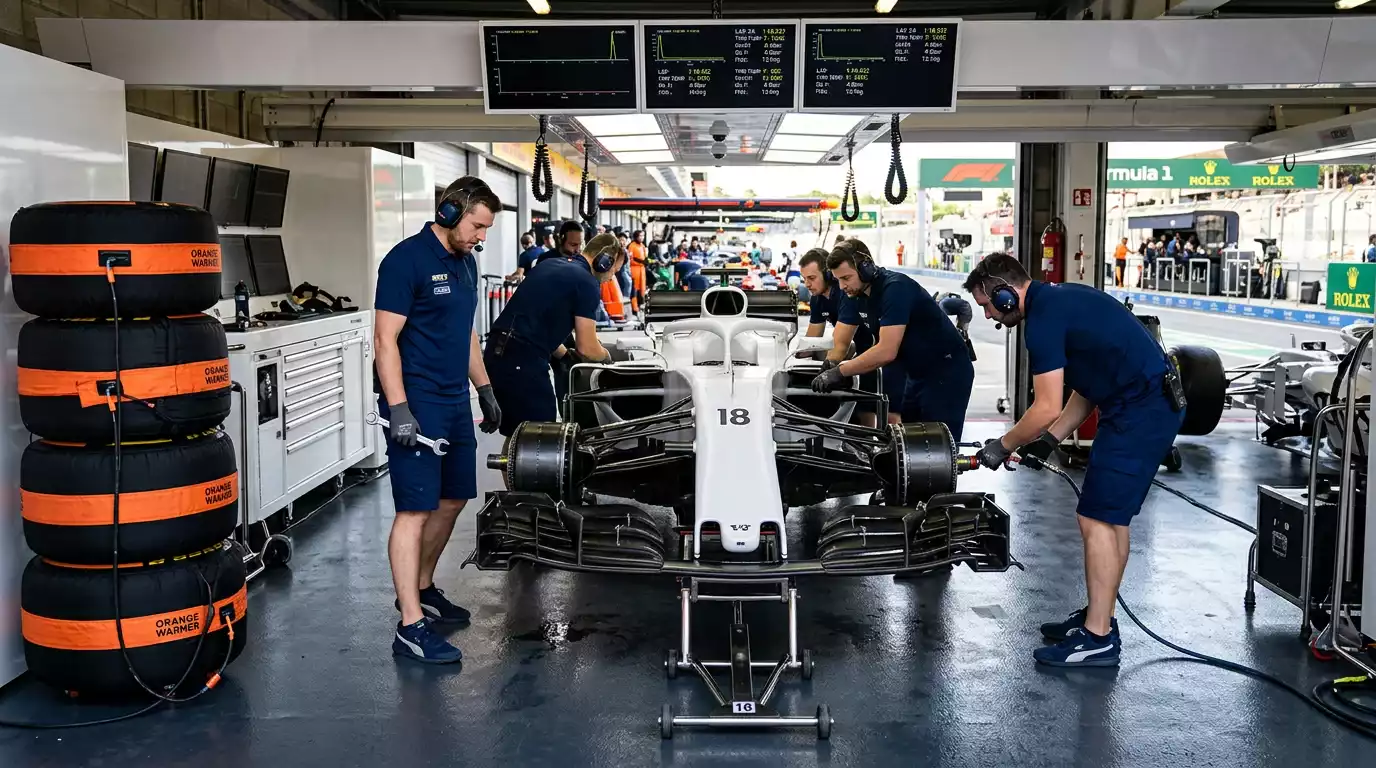
The 2026 F1 season features 24 Grands Prix spread across roughly nine months, from March to December. Each standard race weekend follows a three-day format: two practice sessions and qualifying on Friday and Saturday, then the race on Sunday. But not every weekend is standard. Several rounds include a sprint weekend format, which compresses the timetable: a single practice session on Friday, sprint qualifying and the sprint race on Saturday, then full qualifying and the Grand Prix on Sunday. Sprint weekends give you less practice data to work with but more betting markets. You’re effectively getting two races in one weekend.
The F1 season operates on a points system across two championships running simultaneously. The World Drivers’ Championship (WDC) awards points to the top ten finishers in each race, with 25 for a win, plus a bonus point for fastest lap if the driver finishes in the top ten. The World Constructors’ Championship (WCC) aggregates both drivers’ points for each team. Ten teams field two drivers each, making 20 cars on the grid. Understanding this dual-championship structure matters because it creates two parallel betting markets with different dynamics.
From a betting perspective, the season breaks into three distinct phases. The opening five to six races are high-volatility: teams are still understanding their cars, the competitive order is fluid, and bookmakers are working with limited data. This is where outright championship prices move most aggressively. The mid-season stretch, roughly races seven through eighteen, is where patterns consolidate and qualifying data becomes genuinely predictive. The final run of races brings the championship pressure that warps normal performance patterns: drivers defending a lead take fewer risks, while those chasing will gamble on strategy.
WDC (World Drivers’ Championship) – the season-long competition between individual drivers, decided by cumulative points across all races.
WCC (World Constructors’ Championship) – the season-long competition between teams, combining points scored by both of a team’s drivers.
Sprint – a shortened race (roughly 100 km, about one-third of a Grand Prix distance) held on Saturday at select weekends, with its own qualifying session and separate points allocation.
The record cumulative attendance of 6.7 million fans at circuits in 2025, with 19 of 24 events sold out, reflects a sport that has never been more watched or more wagered on. For bettors, each of those 24 weekends is a discrete event with its own data cycle. The key is knowing where you are in the season and adjusting your approach accordingly: early-season volatility favours longer-odds bets, mid-season stability rewards form analysis, and late-season championship pressure creates its own unique value.

F1 Betting Markets: A Complete Overview
When I started betting on F1, I thought there were three markets: who wins the race, who wins the championship, and who gets pole. I was wrong by about fifteen markets. The range of wagers available on a single Grand Prix weekend is broader than most punters realise, and choosing the right market for your edge matters more than finding the right driver.
F1 betting markets split into two broad categories, and understanding the distinction is fundamental to building a coherent approach.
Outright Markets
Season-long bets placed before or during the championship. These include the Drivers’ Championship winner, Constructors’ Championship winner, and various “top N” finishes in the final standings. Outrights are priced months in advance and shift throughout the season as results accumulate. They tie up your capital for the long haul but often offer the best raw value early in the year, when uncertainty is highest.
Race-Day Markets
Individual event bets tied to a specific Grand Prix or sprint. These include race winner, podium finish, points finish (top ten), fastest lap, pole position, head-to-head driver matchups, constructor finishing order, and an expanding range of prop bets. Race-day markets give you a result within hours and allow you to use weekend-specific data – practice times, qualifying gaps, weather forecasts – to inform your selections.
Within the race-day category, several markets deserve specific attention. The race winner market is the most liquid but also the hardest to beat. Favourites convert at a high rate in F1, and the top two or three drivers often account for the vast majority of race wins in a season. The podium finish market (top three) offers better strike rates at shorter odds, making it attractive for accumulator legs. Fastest lap is a quirky market influenced by tyre strategy: teams often pit a driver for fresh soft tyres late in the race specifically to grab the fastest lap bonus point, making this market partially predictable if you understand team tactics.
Head-to-head matchups pit two drivers against each other regardless of their finishing position – you’re betting on which of the pair finishes higher. This is where form analysis and qualifying data earn their keep. If you know one driver has a pace advantage at a particular circuit type but the bookmaker has priced them evenly, you’ve found an edge without needing to predict the winner.
Each-way – a bet that splits your stake into two parts: one on the driver to win, one on the driver to finish in the “places” (typically top three in F1). If the driver wins, both parts pay. If the driver finishes in the places but doesn’t win, only the place part pays at a fraction of the win odds.
Accumulator (acca) – a single bet combining multiple selections across different markets or races. All selections must win for the bet to pay out, but the combined odds multiply, creating larger potential returns from small stakes.
Head-to-head – a market matching two specific drivers against each other. You bet on which driver finishes higher in the race, regardless of their absolute finishing positions.
For a detailed breakdown of every market type – including group betting, classified finisher markets, and the emerging novelty props powered by real-time data – see the full guide to F1 betting markets. The pillar principle is this: don’t default to the race winner market because it’s familiar. Match your market to your knowledge edge.

Understanding F1 Odds and Implied Probability
Here’s a confession: for my first two years of F1 betting, I couldn’t have told you the difference between 5/1 and 5.0 decimal odds. I just looked at the number and thought “bigger is better.” That ignorance cost me money. Not because I picked wrong, but because I couldn’t tell when a price was genuinely good versus merely available.
UK bookmakers default to fractional odds, the format you’ll see at any high street shop or on most British betting sites. Fractional odds of 7/2 mean you win £7 for every £2 staked, plus your stake back. Decimal odds (common on exchanges and European platforms) express the total return: 4.50 decimal means a £10 bet returns £45 total (£35 profit plus £10 stake). American odds use a baseline of 100. Positive numbers show profit on a £100 stake (+350 means £350 profit), while negative numbers show how much you need to stake to win £100 (-200 means stake £200 to win £100).
But the format is just packaging. The real analytical tool is implied probability – the percentage chance that the odds suggest a given outcome will occur. For fractional odds, the formula is simple: denominator divided by (denominator plus numerator), multiplied by 100. So 7/2 implies a probability of 2 / (2 + 7) = 22.2%. For decimal odds, divide 1 by the decimal: 1 / 4.50 = 22.2%. Same result, different route.
Converting Between Formats: A Quick Reference
| Fractional | Decimal | Implied Probability |
|---|---|---|
| 1/1 (evens) | 2.00 | 50.0% |
| 5/2 | 3.50 | 28.6% |
| 7/1 | 8.00 | 12.5% |
| 14/1 | 15.00 | 6.7% |
| 33/1 | 34.00 | 2.9% |
Why does this matter for F1 specifically? Because F1 betting markets show a remarkably high correlation of 0.95 between implied market probabilities and actual bookmaker pricing over the last two seasons, per Sparkco.ai’s analysis. That tight relationship means the odds you see are broadly efficient, which in turn means casual “gut feel” bets are unlikely to beat the market over time. You need a framework for identifying spots where the implied probability diverges from your own informed assessment.
Calculating Expected Value on an F1 Bet
Suppose a driver is priced at 5/1 (decimal 6.00) to win a race. The implied probability is 1 / 6.00 = 16.7%.
After analysing qualifying data, track history, and weather conditions, you assess the driver’s true probability at 22%.
Expected Value (EV) = (probability of winning x profit) – (probability of losing x stake)
EV = (0.22 x £50) – (0.78 x £10) = £11.00 – £7.80 = +£3.20 per £10 staked
A positive EV means this bet has value over time. A negative EV means the bookmaker’s price is fair or the selection is overpriced.
The full mechanics of odds conversion, overround calculation, and line movement analysis are covered in depth in the F1 betting odds guide. For the purposes of this overview, the core principle is: never bet on a driver because you like the odds. Bet because the implied probability is lower than your assessed probability. That’s the entire game.
Knowing how to read odds is one half of the equation. The other half is knowing what data to feed into your assessment before you ever open a betting slip.
Factors to Research Before Placing an F1 Bet
I keep a pre-race checklist pinned above my desk. It started as a scribble on a Post-it note after I lost three consecutive bets by ignoring basic variables: a wet qualifying session at Spa, a driver change at a team I hadn’t been tracking, a circuit where the favourite had never finished on the podium. The checklist has grown since then, but the principle hasn’t changed: don’t bet until you’ve checked the fundamentals.
Six Factors to Check Before Every F1 Bet
- Qualifying pace – Recent qualifying form is the single strongest predictor of race-day performance. A driver consistently starting in the top five has a fundamentally different win probability than one qualifying eighth or ninth, regardless of what the odds suggest.
- Track type – Circuits divide into categories: high-speed tracks favouring aerodynamic efficiency (Monza, Spa), technical tracks demanding mechanical grip (Monaco, Hungary), and street circuits where overtaking is difficult and qualifying position is amplified. Each type favours different cars and drivers.
- Weather forecast – Rain transforms F1 races. Wet conditions increase safety car probability, compress the field, and historically produce more upset results. Check multiple forecast sources within 24 hours of the race – not three days before.
- Tyre degradation – Some circuits destroy tyres, forcing multiple pit stops and creating strategy variability. Others are gentle on compounds, leading to predictable one-stop races. High degradation = more strategic options = more unpredictable outcomes.
- Team form trajectory – F1 teams bring upgrades throughout the season. A team that was mid-pack three races ago may have gained half a second per lap through a new floor or revised front wing. Recent trajectory matters more than season-opening form.
- Regulation changes – The 2026 technical regulations represent a complete reset: new power units, revised aerodynamics, lighter cars. Historical form data becomes less reliable during regulation transitions, and early-season uncertainty creates both risk and value.
The temptation is to skip this process for “obvious” races – the ones where a dominant driver is heavy favourite and the outcome feels predetermined. Resist that temptation. Even at circuits where the favourite wins most years, the value might lie in adjacent markets: fastest lap, driver-versus-driver contests in the midfield, or the points finish market where a 6/1 shot has a genuine 20% chance of landing. The checklist doesn’t tell you who to back. It tells you where to look.
Do
- Cross-reference qualifying gaps with historical data at the same circuit
- Factor in practice session long-run pace, not just single-lap speed
- Check whether a team has brought car upgrades for this specific weekend
- Compare your probability assessment against the implied odds before staking
Don’t
- Bet on race winner markets based solely on championship standings
- Ignore free practice data because “it’s just practice”
- Assume last year’s circuit results will repeat under new regulations
- Chase a loss from Saturday qualifying by doubling down on Sunday
One more thing I’ve learned the hard way: the best pre-race research doesn’t guarantee winners. It guarantees better decisions. Over a 24-race season, making slightly better decisions on every bet compounds into a meaningful edge. Missing even one of these factors – especially weather or track type – can turn a positive-EV bet into an expensive lesson.

A Data-Led Approach to F1 Betting
58% of motorsport bettors are aged 18 to 34, according to YouGov’s global gambling profiles – a demographic that grew up with data dashboards, fantasy leagues, and real-time analytics. If that describes you, good news: F1 betting rewards the analytical mindset more than almost any other sport.
The framework I use isn’t complicated. It boils down to three pillars: identify value, size your bets correctly, and track everything. Let me break each one down.
Identifying value starts with the implied probability calculation I covered earlier, but it doesn’t end there. The real skill is building your own probability model for each race, even a rough one. You don’t need a spreadsheet with 47 variables. You need an honest assessment of each contender’s chance, informed by your checklist factors, that you can compare against the bookmaker’s implied probability. When your number is significantly higher than theirs, you have a value bet. When it’s not, you pass. The discipline to pass is worth more than any single winning bet.
Spotting Value: A Practical Example
A midfield driver is priced at 14/1 for a podium finish at a circuit where rain is forecast. Implied probability: 6.7%.
You know this driver has finished on the podium in two of the last four wet races. The circuit is a street track where safety cars are common – historically two or more per race at this venue. You also note the driver qualified fifth, ahead of several higher-rated competitors.
Your assessed probability: 15%. That’s more than double the bookmaker’s implied price.
EV = (0.15 x £140) – (0.85 x £10) = £21.00 – £8.50 = +£12.50 per £10 staked
This is a clear value bet – not because the driver will necessarily finish on the podium, but because the price significantly underestimates the probability.
Bankroll management is the topic most bettors skip, and the reason most bettors lose. I allocate a fixed bankroll for the F1 season and divide it into units. A standard bet is one unit. A strong value bet might be two units. I never exceed three units on a single wager, and I never bet more than 5% of my remaining bankroll on any single race weekend. These aren’t arbitrary rules; they’re the guardrails that keep you in the game through inevitable losing streaks. For a detailed breakdown of staking plans and the Kelly Criterion adapted for F1, see the F1 betting strategy guide.
Bankroll Basics: 31% of motorsport bettors spend more than $100 per month on betting and fantasy combined, per YouGov data, higher than NFL, NBA, or football bettors. That level of spend demands discipline. Set a seasonal budget before the first race. Divide it into units. Bet in units, not in “feelings.” If you burn through your bankroll by round eight, you’ve missed sixteen races of potential value.
Tracking results is the feedback loop that turns betting from a hobby into a process. I log every bet: date, market, selection, odds, stake, result, and my pre-bet probability assessment. At the end of every five-race block, I review where my assessments were accurate and where they were wrong. Over time, this reveals whether you have a genuine edge in certain markets (for me, it’s head-to-head matchups) and where you’re consistently overestimating your read (for me, it used to be fastest lap bets).
A data-led approach only works within a regulated market that protects your deposits, enforces fair settlement, and gives you recourse if something goes wrong. That market, in the UK, is built on a single institution.
F1 Betting and UK Regulation
I get asked this more than any other question: “Is it actually legal to bet on F1 in the UK?” The answer is yes, unambiguously, fully, and under one of the most rigorous regulatory frameworks in the world. But “legal” is doing a lot of work in that sentence, so let me explain what it actually means for you.
The UK Gambling Commission (UKGC) is the regulatory body that licenses and oversees all gambling operators serving UK customers. If a betting site wants to offer F1 markets to anyone in Britain, it must hold a UKGC licence. This is non-negotiable. The total gross gambling yield (GGY) of the UK gambling industry reached £16.8 billion for the year to March 2025, a 7.3% year-on-year increase. Remote betting specifically, the category that covers online sportsbooks where you’ll place your F1 bets, generated £2.6 billion in GGY, with football (£1.3 billion) and horse racing (£766.7 million) leading the segment.
F1 doesn’t appear as a separate line item in the Gambling Commission’s statistics, which itself tells you something about the sport’s current share of the market. But that share is growing, and the regulatory protections that apply to football and horse racing betting apply identically to F1. These include mandatory segregation of customer funds, transparent terms for bet settlement, access to alternative dispute resolution, and the requirement for operators to identify and intervene with customers showing signs of harm.
UKGC licence = mandatory. Any operator offering F1 betting to UK customers without a UKGC licence is operating illegally. Before placing a bet, verify the operator’s licence on the Gambling Commission’s public register. Offshore operators licensed only in Curacao, Malta, or other jurisdictions do not provide the same protections, and using them means you have no recourse under UK consumer law if something goes wrong.
The UKGC recovered £13.4 million from non-compliant operators through fines and regulatory settlements in the 2023-2024 period. This enforcement activity isn’t abstract. It directly funds consumer protection and signals that operators face real consequences for failing to meet their licence conditions.
For a comprehensive walkthrough of the UKGC framework, licence types, and how to verify an operator’s credentials, the guide to F1 betting sites in the UK covers the topic in full. The bottom line for this guide: only bet with UKGC-licensed operators. It’s the single most important decision you’ll make before you even look at odds.
How the 2026 F1 Regulations Reshape Betting Markets
Every few years, F1 tears up the technical rulebook and starts again. The last major reset was 2022, when ground-effect aerodynamics returned and completely reshuffled the competitive order. The 2026 regulations are a bigger reset still, and if you’re betting on this season, you need to understand what’s changed and why it matters for your wagers.
The headline change is the power unit. From 2026, F1 cars derive roughly 50% of their total power from the electric motor, a massive jump from the previous split. The internal combustion engine shrinks in output while the MGU-K (Motor Generator Unit – Kinetic) dramatically increases. New power unit manufacturers have entered the sport specifically for this regulation cycle. The aerodynamic rules have also been overhauled, with cars designed to produce less dirty air behind them, theoretically enabling closer racing and more overtaking.
The last time F1 introduced a radically new power unit formula was 2014 – and the team that nailed that transition (Mercedes) won eight consecutive Constructors’ Championships. Regulation resets don’t just change the cars; they rewrite the competitive hierarchy for years.
For bettors, the implications are significant. Historical circuit data becomes less reliable during regulation transitions because the cars behave differently. A team that dominated at high-speed circuits under the old rules might struggle under new aerodynamic regulations that change downforce levels and cornering speeds. The competitive order in the first five or six races is genuinely uncertain, which means outright championship odds carry wider margins and race-winner markets offer longer prices on a broader range of contenders.
George Russell, speaking about the 2026 changes, noted that “the fans are loving the racing at the moment” – a comment reflecting optimism that the new rules will maintain or improve the on-track spectacle. For bettors, “loving the racing” translates to tighter fields, more unpredictable results, and better value on non-favourite selections. Regulation resets are historically the best time to bet on F1 for anyone willing to do the analytical work, because the bookmaker’s models are working with the same limited data as everyone else.
Major regulation changes create a window of genuine market uncertainty. Early-season 2026 bets on outright championships and race winners will carry more risk but also more potential value than in a stable-regulation year. If you’ve been waiting for a time when the “obvious” favourite isn’t so obvious – this is it.

Responsible Gambling: Tools and Limits
I’ve written several thousand words in this guide about finding value, calculating edge, and building a systematic approach. None of it means anything if you can’t walk away from the screen when you should. I say that without any trace of moralising. It’s a practical statement from someone who has seen the line between “engaged” and “compulsive” blur across a 24-race calendar.
The numbers are sobering. Approximately 2.5% of the UK adult population experiences problems with gambling, and the National Gambling Support Network treated 10,754 people in 2023-24, a 12% increase year on year. UK gambling companies spend £1.5 billion annually on advertising, and over half of the British public supports reducing gambling advertising. These aren’t abstract statistics for a different audience. They’re the backdrop to a market that 37.4 million active online accounts use every year.
Tools every UK bettor should know about: GamStop is the national self-exclusion scheme – if you register, all UKGC-licensed operators must block your access for a minimum of six months, with options for one year or five years. Every licensed operator must also offer deposit limits, loss limits, session time limits, and reality check notifications. Since April 2025, online slot stakes are capped at £5 for adults (£2 for 18-24 year olds). These tools exist because they work. Use them proactively, not as a last resort.
If you or someone you know needs support, the National Gambling Support Network provides free, confidential help. GamCare offers telephone and online counselling. These services are funded by the gambling industry and available to anyone regardless of the severity of their situation.
My own rule is straightforward: if I’m betting on F1 because I want to bet rather than because I’ve found genuine value, I close the app. The distinction between those two motivations is subtle but critical. One is a process. The other is a compulsion dressed up as a process. The tools are there to help you maintain that distinction across a season that stretches over nine months and 24 race weekends.
Frequently Asked Questions About F1 Betting
Is F1 betting legal in the UK?
Yes. F1 betting is fully legal in the UK for anyone aged 18 or over. All operators offering F1 markets to UK customers must hold a licence from the UK Gambling Commission (UKGC). This licence ensures customer fund protection, transparent bet settlement, and access to dispute resolution. Always verify that your chosen operator holds an active UKGC licence before depositing funds – you can check the public register on the Gambling Commission’s website.
What types of bets can you place on Formula 1?
F1 offers a wide range of betting markets. Outright markets let you bet on season-long outcomes like the Drivers’ or Constructors’ Championship winner. Race-day markets include race winner, podium finish, fastest lap, pole position, head-to-head driver matchups, points finish, and constructor finishing positions. Accumulator bets combine multiple selections for larger potential returns. Each-way betting splits your stake between a driver winning and finishing in the top three. The market range is expanding as real-time data providers introduce new in-play propositions.
How do F1 betting odds work?
F1 odds express the bookmaker’s assessment of how likely an outcome is. UK bookmakers typically use fractional odds (e.g. 7/2, meaning £7 profit for every £2 staked). Decimal odds (e.g. 4.50) show total return including stake. American odds use a +/- baseline of 100. The key analytical tool is implied probability – the percentage chance that the odds represent. For fractional odds of 7/2, the implied probability is 2 / (2+7) x 100 = 22.2%. Comparing implied probability to your own assessment of a driver’s chances is how you identify value.
What factors should I research before placing an F1 bet?
Six factors form the core of pre-race research: qualifying pace and grid position, track type and its historical patterns, weather forecasts within 24 hours of the race, tyre degradation data from practice sessions, team form trajectory including recent upgrades, and any regulation changes affecting car performance. These factors don’t guarantee winning bets, but they ensure your selections are based on relevant data rather than gut feeling or brand loyalty.
Can you bet on F1 races live?
Yes. In-play betting on F1 is available through most UKGC-licensed operators, and the range of live markets is expanding rapidly. You can bet during the race on outcomes like race winner, podium finish, and paired driver matchups, with odds adjusting in real time based on on-track action. Safety car deployments, pit stops, and weather changes create significant odds movements during a race, which is why F1 live betting demands both speed and discipline.
What is each-way betting in F1?
Each-way betting splits your total stake into two equal parts: one on the driver to win the race, and one on the driver to finish in the “places” – typically the top three in F1, though terms vary by bookmaker and race. If the driver wins, both parts pay out. If the driver finishes in the places but doesn’t win, only the place part pays, at a fraction of the win odds (commonly 1/4 or 1/5). Each-way is particularly useful when backing a midfield driver at longer odds – you get insurance on the place portion if they finish on the podium without winning.
How do the 2026 regulation changes affect F1 betting markets?
The 2026 technical regulations introduce a fundamentally new power unit (approximately 50% electric output), revised aerodynamics, and lighter cars. These changes reset the competitive order because teams are effectively designing new cars from scratch. For bettors, this means historical data is less predictive in the early part of the season, outright championship odds carry wider uncertainty margins, and race-winner markets offer more value on non-favourites. Regulation resets are historically the best windows for analytical bettors to find mispriced odds.
Created by the ”f1 Betting Guide” editorial team.