F1 Tyre Strategy and Betting: Compound Data, Degradation Rates and Strategy Reads
 Available in US
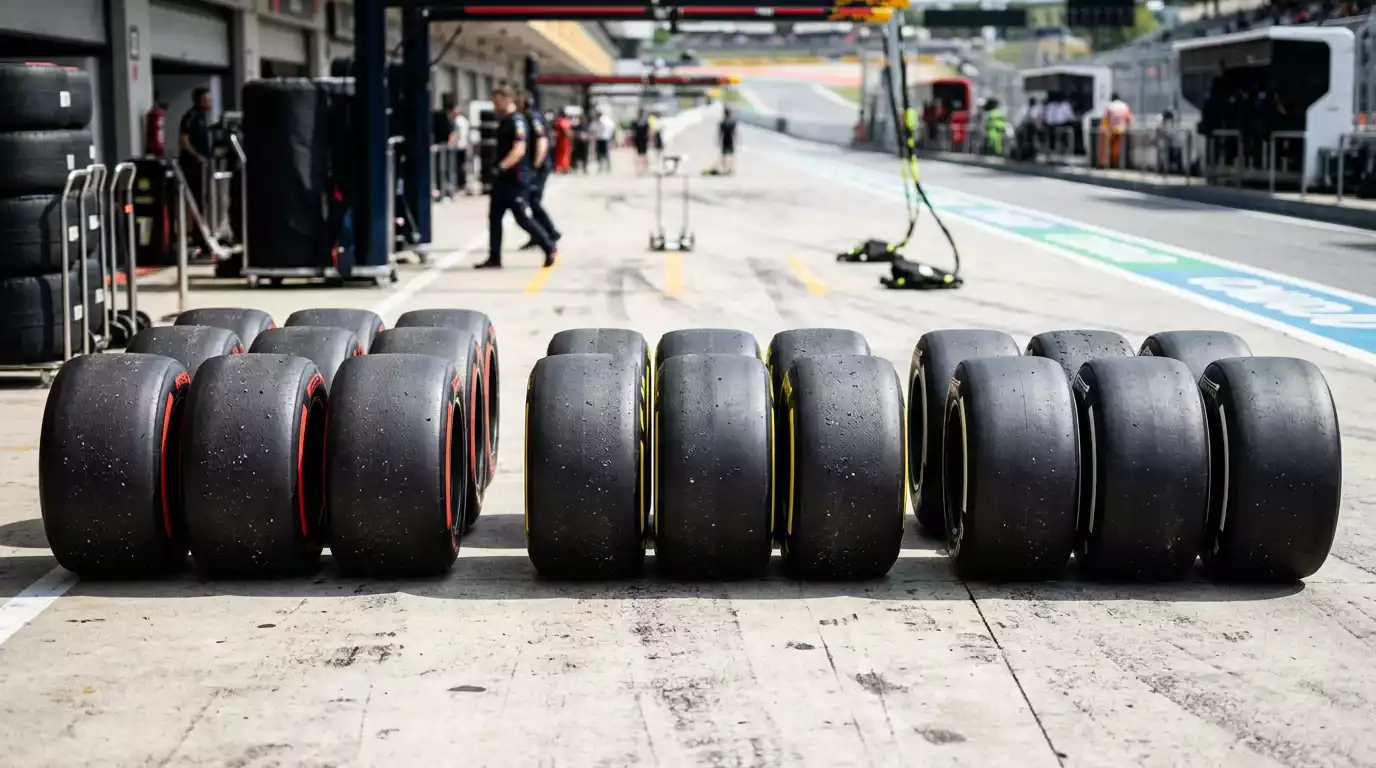
Three tyres decided the 2024 Abu Dhabi Grand Prix. The race leader pitted for mediums on lap 18 while his closest rival stayed out on hards for ten more laps. By the time the rival pitted, the leader had built a gap that proved unassailable. The compound choice – mediums versus hards – looked marginal before the race. After it, the outcome felt inevitable. Tyre strategy is the lens through which I now evaluate every single F1 bet, and it has transformed my strike rate more than any other analytical improvement I have made.
Understanding the Tyre Compounds and Their Betting Implications
Pirelli brings three dry-weather compounds to each Grand Prix, labelled soft (red), medium (yellow) and hard (white). The actual rubber composition varies between circuits – a “medium” at Monza is not the same compound as a “medium” at Monaco – but the relative performance hierarchy within each weekend is constant: softs are fastest over one lap but degrade quickest, hards are slowest initially but last longest, and mediums sit between.
The performance gap between compounds – measured in seconds per lap on fresh rubber – is the first number I look for during Friday practice. Pirelli typically targets a gap of 0.6 to 0.8 seconds between each step, but reality varies. At circuits where the gap is larger than expected, the compound choice matters more, and strategic variation between teams creates bigger finishing-order disruptions. At circuits where the gap is smaller, teams converge on similar strategies and the race follows qualifying order more closely.
I check Pirelli’s pre-weekend compound nomination as soon as it is published, usually ten days before each race. When Pirelli selects softer-than-expected compounds for a circuit – stepping down one level from the previous year – it signals higher expected degradation, which opens the door to strategic variety and increases the probability that a slower qualifier can overtake through strategy. That compound selection alone adjusts my pre-weekend model before any on-track data exists.
Degradation Rates: The Number That Decides Races
Friday’s long-run data in FP2 is the single most valuable dataset for Sunday race prediction, and the core metric within it is the degradation rate – how many seconds per lap each compound loses over a stint. I record each driver’s lap times during their FP2 long run, strip out laps affected by traffic or mistakes, and calculate the per-lap degradation. A driver showing 0.08 seconds per lap degradation on mediums is managing their tyres beautifully. A rival showing 0.15 seconds per lap on the same compound is in trouble.
The degradation differential between drivers and teams reveals who will have strategic flexibility on Sunday and who will not. A team with lower degradation can run longer stints, pit later, and use the overcut to gain positions. A team with higher degradation is forced into earlier pit stops and must rely on the undercut, which only works if their pit crew is fast enough to make the fresh-tyre advantage count before the rival responds.
The F1 Global Fan Survey revealed that 90% of fans feel emotionally engaged with the sport, and much of that engagement comes from the strategic chess match that tyre management creates. Bettors who tap into this layer of the race, rather than simply backing the fastest car, access a deeper understanding of how results are actually determined. The fastest car on a single lap does not always win the race if it destroys its tyres over a stint.
Reading Strategy Calls in Real Time
Live betting during tyre strategy windows is where I generate the most consistent return. The optimal moment to place a live bet is the lap before a key driver pits, when the market has not yet adjusted to the imminent stop but the timing data clearly signals it is coming. Tyre degradation that accelerates beyond two tenths per lap usually triggers a pit stop within three laps. If I spot this acceleration in the timing data while the live odds still reflect the driver’s current position, I have a window to act before the market catches up.
Teams communicate strategy decisions via radio, and live radio broadcasts during races are publicly available. A team telling their driver to “push now, we are coming in next lap” is a direct signal that the undercut is about to happen. By the time the TV broadcast shows the car entering the pit lane, the market has already moved. The radio signal precedes the visual signal by fifteen to thirty seconds, enough time to place a live bet on the driver benefiting from the strategic call.
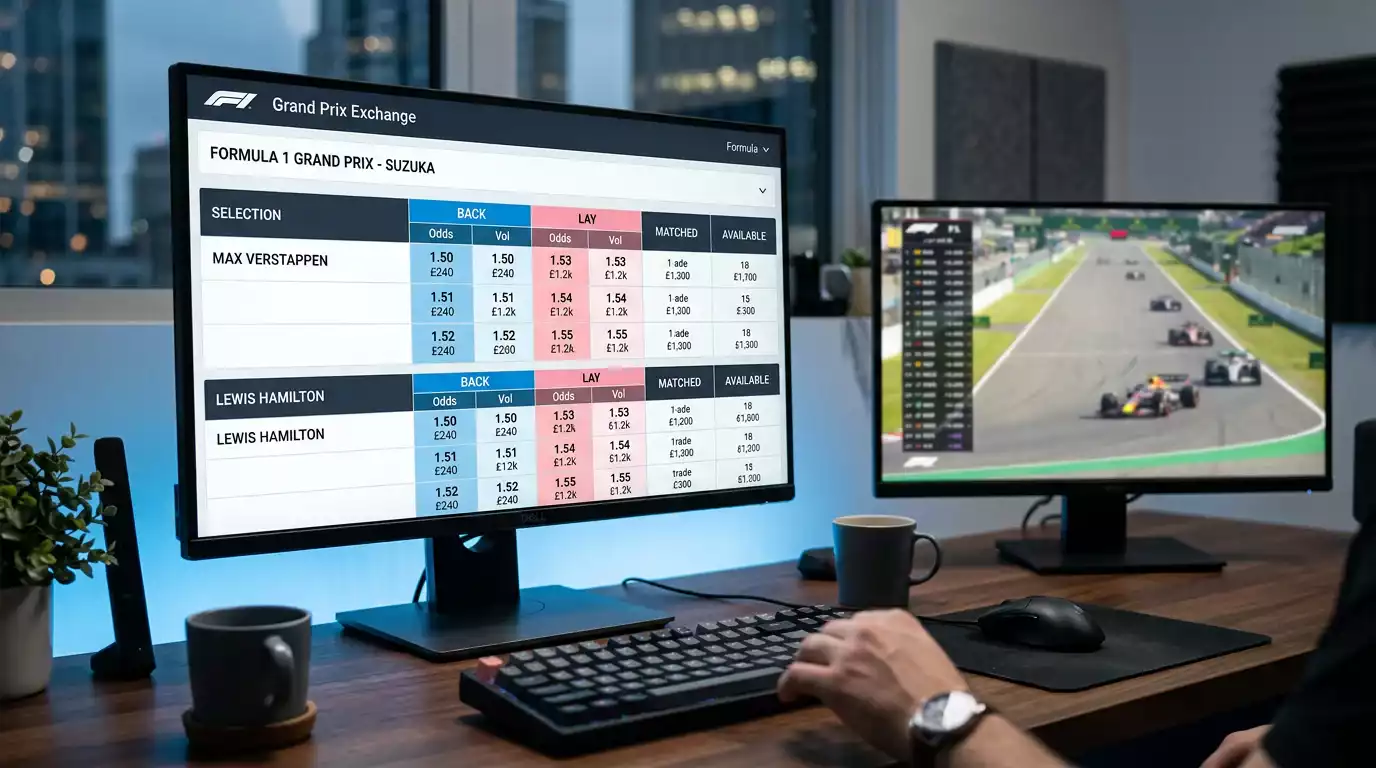
The Betfair Exchange handled over £200 million in F1 exchange turnover in 2023, and much of that liquidity flows through during the pit stop windows when tyre strategy is actively reshaping the race. Trading on an exchange during these windows requires speed and conviction: the odds swing within seconds of a pit stop, and the trader who has already anticipated the stop from degradation data is positioned before the volume spike hits.
Building Tyre Data into Your Pre-Race Process
My pre-race process for tyre analysis follows a fixed sequence. Ten days out: check Pirelli compound selection and compare with previous years. Friday evening: record FP2 long-run degradation rates for every driver, classify each team’s likely preferred strategy (one-stop, two-stop, or flexible). Saturday morning: cross-reference FP3 short-run data with FP2 long-run data to identify any overnight setup changes that altered tyre behaviour. Saturday afternoon: note Q2 tyre choices for the top ten, which determines their starting compound for Sunday.
The synthesis of all four inputs produces what I call a “strategy map”, a prediction of which lap windows each team will pit, which compound they will switch to, and where on track they will emerge relative to their rivals. This map is not perfect, but it is far more accurate than the race-morning odds imply. 31% of UK motorsport bettors spend over £100 per month, and most of them place their Sunday bets based on qualifying position alone. The strategy map gives you the layer of analysis they are missing.
One pattern I have identified across multiple seasons: when two rival drivers qualify within two positions of each other and one starts on mediums while the other starts on softs, the medium-starting driver wins the battle roughly 60% of the time if the circuit has moderate-to-high degradation. The soft-tyre starter gets an initial advantage off the line but burns through that rubber faster, forcing an earlier stop that hands strategic control to the medium runner. This pattern breaks down at low-degradation circuits where the soft tyre lasts long enough to negate the compound difference, but at high-degradation venues like Barcelona, Bahrain or Austin, the qualifying compound choice is worth more than the grid position itself.
How do tyre compounds affect F1 race outcomes?
The three dry-weather compounds, soft, medium and hard, create strategic variety through performance gaps and degradation rates. Softs are fastest initially but wear out quickest, while hards offer endurance at the cost of peak pace. The compound choice determines pit stop timing, which directly affects finishing positions. Friday practice degradation data reveals which teams will have strategic flexibility on race day.
What is the best way to use tyre data for F1 betting?
Record FP2 long-run degradation rates for each driver, classify each team’s likely strategy, then cross-reference with Q2 starting compound choices. The synthesis of degradation data and compound strategy produces a strategy map that predicts pit windows and post-stop track positions. Live betting during the lap before a key driver pits, when degradation data signals an imminent stop, offers the best entry point.
Created by the ”f1 Betting Guide” editorial team.