F1 Head-to-Head Betting: Teammate Matchups, Cross-Team Duels and Pricing Gaps
 Available in US
Head-to-head markets are the quietest gold mine in F1 betting. While everyone fights over the race winner at 3/1 or 5/1, I am sitting in the head-to-head section backing one driver to beat another at odds that imply a 55% chance when my data says it is 70%. The returns are smaller per bet, but the hit rate is dramatically higher than any outright market. Over the past four seasons, my head-to-head bets have delivered a positive ROI every single year. I cannot say the same about race winner or championship futures. See also: f1 betting guide for driver matchup strategies.
Teammate Head-to-Heads: The Cleanest Bet in F1
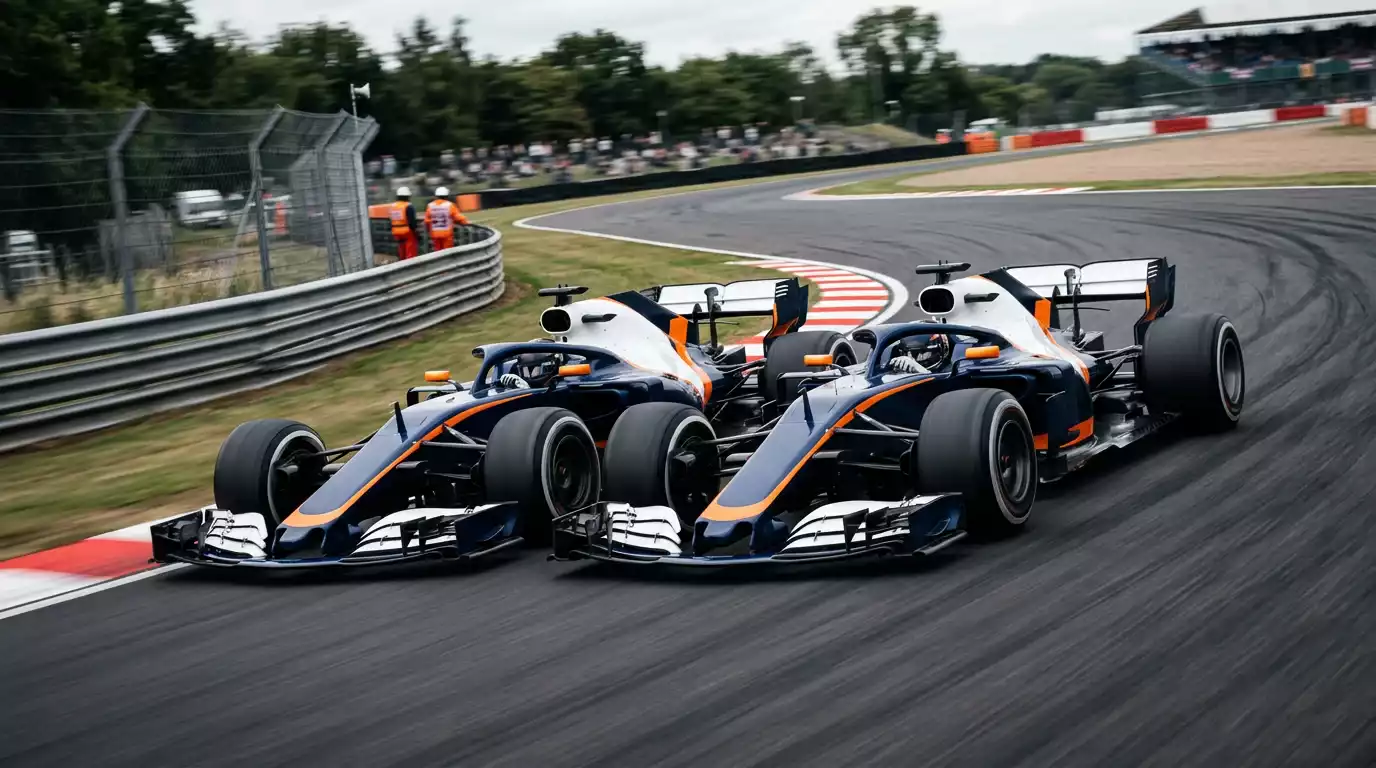
Two drivers in the same car. Same engine, same aerodynamic package, same fuel load, same tyre allocation. The only variable is the driver and their setup preferences. This is why teammate head-to-heads are the purest form of F1 bet – you strip away car performance entirely and bet on human ability.
The market prices teammate matchups based on season-long qualifying and race data, which is a reasonable starting point but misses weekend-specific variation. A driver who has beaten their teammate in seven of nine races will be priced as a heavy favourite for race ten, but if the tenth race is at a circuit where the teammate has historically excelled – a track that suits their driving style, reward their braking technique, or plays to their wet-weather advantage – the price on the underdog is too generous.
I track circuit-specific teammate performance splits going back three seasons. The data reveals that most driver pairings have two or three circuits where the expected dominance pattern reverses. The lead driver at most tracks becomes the slower driver at, say, Monaco (where feel and precision outweigh aggression) or Monza (where one driver’s superior engine deployment or slipstream management shows). Identifying these “reversal circuits” and backing the underdog at inflated odds is the core of my teammate head-to-head strategy. Sparkco.ai’s 0.95 correlation between implied probability and bookmaker odds holds for season-long averages, but circuit-specific splits break that correlation because the market does not adjust individual race pricing with the same precision.
Cross-Team Head-to-Heads and Where Value Hides
Cross-team matchups – one driver against a rival from a different team – are noisier than teammate bets because you are comparing two different cars. But that noise is also where the value lives. The market sets cross-team head-to-head prices based primarily on overall team performance: if Team A’s car is half a second faster per lap than Team B’s car, Team A’s driver will be a heavy favourite in a cross-team matchup regardless of driver quality.
The flaw in this approach is that car performance advantages vary by circuit type. Team A might be half a second faster at high-speed circuits but only a tenth faster at slow, twisty street circuits. If the upcoming race is at a street circuit, the cross-team price still reflects the overall half-second gap rather than the circuit-specific tenth of a second. I classify each upcoming race by circuit type – power, downforce, balanced, street – and apply team performance data specific to that category. When the circuit-specific gap is smaller than the season average, the underdog team’s driver is underpriced in the cross-team matchup.
The 37.4 million active UK online gambling accounts represent a market where the majority of head-to-head bettors do not segment performance by circuit type. That majority drives the market price toward season-average thinking, which creates weekend-specific opportunities for bettors who do the circuit classification work. The edge is modest – usually five to ten percentage points of implied probability, but it compounds across twenty-four race weekends into a meaningful annual return.
Retirement Rules and Their Impact on Head-to-Heads
Every bookmaker handles retirements differently in head-to-head markets, and failing to read the settlement rules is one of the most expensive mistakes in F1 betting. Some operators void the bet if either driver retires. Others settle in favour of the driver who completed more laps. A few settle based on the driver who was ahead at the point of retirement. The differences are enormous.
Under “most laps completed” rules, a driver who retires on lap 50 beats a driver who retires on lap 30, even if the lap-30 retiree was running ahead at the time. Under “void if either retires” rules, the same outcome returns your stake. I always check the specific settlement terms before placing a head-to-head bet, and I factor retirement probability into my pricing. Teams with known reliability concerns, recurring gearbox issues, power unit mileage limits approaching, carry higher retirement risk that should discount their driver’s head-to-head price.
If both drivers in a head-to-head are from the same team and the team has a known reliability issue, the retirement risk is correlated, both drivers share the same engine architecture and similar component ages. Correlated retirement risk means both drivers are equally likely to retire, which does not change the head-to-head pricing much. But if the two drivers are from different teams with different reliability profiles, one driver’s higher retirement risk creates a genuine pricing input that the market often underweights.
Building a Season-Long Head-to-Head Portfolio
I treat head-to-head betting as a portfolio rather than individual bets. Across a season, I target three to four driver matchups per race weekend, focusing on teammate bets at reversal circuits and cross-team bets at circuit-type mismatches. A typical weekend produces two bets at odds between 1.70 and 2.20, with an expected win rate of 58-62%. That slim edge sounds fragile, but over ninety to a hundred head-to-head bets per season, the statistical sample is large enough for the edge to compound reliably.
The broader strategic framework for F1 betting applies to head-to-heads with one modification: the kelly criterion stake sizing is more aggressive for head-to-head bets than for outright markets because the outcome variance is lower. A head-to-head bet has two outcomes, your driver beats the other or they do not. An outright race winner bet has twenty possible outcomes. Lower variance justifies larger stakes per bet, which means my head-to-head portfolio absorbs a disproportionate share of my total F1 bankroll.
Record-keeping matters more in head-to-head betting than in any other market. I log every bet with the driver pairing, circuit, odds taken, settlement terms and outcome. After each block of ten races, I review the log for patterns: which pairings am I consistently mispricing? Which circuit-type classifications need recalibrating? The YouGov data showing Bet365’s 41% weekly usage rate among UK bettors suggests that most punters do not maintain this level of record-keeping, and that lack of discipline is the structural reason why edges in head-to-head markets persist across seasons rather than being arbitraged away. See also: Saturday sessions matter too — read our F1 qualifying betting guide.
What makes F1 head-to-head bets more profitable than outright markets?
Head-to-head bets reduce the outcome to a binary comparison between two drivers, which lowers variance compared to twenty-driver outright markets. The reduced variance supports higher stake sizing and produces more consistent returns across a season. Teammate head-to-heads are especially clean because both drivers share identical car performance, isolating driver ability as the only variable.
How do retirement rules affect F1 head-to-head betting?
Settlement rules vary between bookmakers. Some void bets if either driver retires, others settle based on most laps completed, and some settle based on running order at the point of retirement. Always check settlement terms before betting. Factor in reliability risk, teams with known mechanical issues carry higher retirement probability that should discount their driver’s head-to-head price.
Published by the f1 Betting Guide team.