F1 Qualifying Betting: Session Structure, Pole Position Markets and Practice Data Reads
 Available in US

Saturday afternoon at Spa-Francorchamps in 2024 taught me more about qualifying betting than any spreadsheet. I had been backing a driver for pole based on his FP2 pace – fastest overall, three tenths clear. Then Q3 came, he went for a banker lap, caught traffic in the final sector, and qualified fourth. The pole sitter was a driver who had been unremarkable in practice but found something extraordinary when it mattered. Qualifying is not a repeat of practice. It is a different discipline entirely, and treating it as such is the first step toward profitable Saturday betting. See also: f1 betting guide for data-driven race analysis.
Understanding the Three-Phase Knockout Format
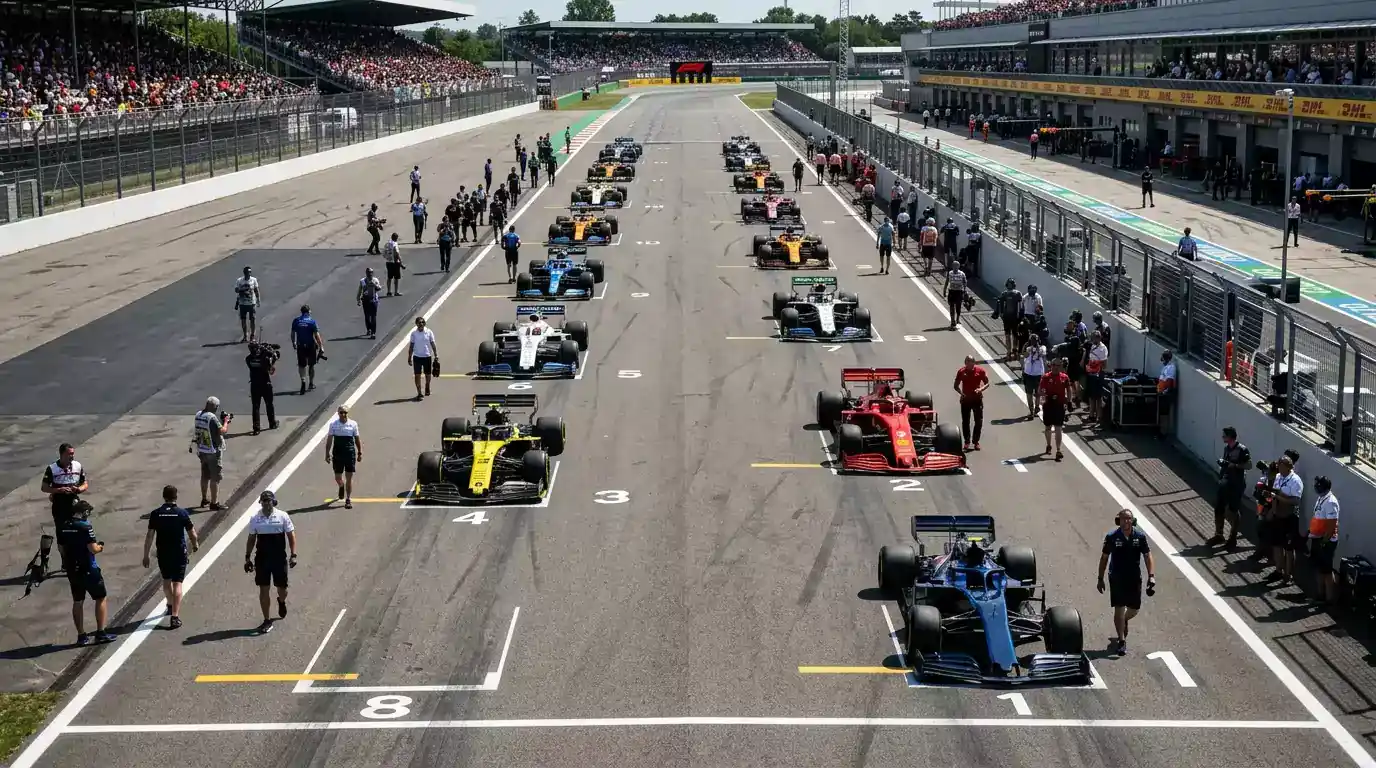
F1 qualifying runs as a knockout across three sessions: Q1 eliminates the slowest five cars, Q2 eliminates the next five, and Q3 determines the top ten grid positions. Each session has its own tactical dynamics, and the smart money accounts for all of them. Q1 is largely irrelevant for top-team bets – the frontrunners cruise through with minimal effort. But Q1 matters enormously for midfield head-to-head bets, because a driver who barely scrapes through Q1 has used an extra set of new tyres that they no longer have available for Q2 or Q3.
Q2 introduces a critical wrinkle: the tyres used to set the fastest Q2 lap become the starting tyres for the Grand Prix. A team that qualifies seventh on medium-compound tyres holds a strategic advantage over a team that qualified sixth on softs, because the medium-shod car will run longer in the first stint and gain flexibility on race strategy. When evaluating qualifying markets alongside Sunday race bets, I always note which compound each Q2 qualifier used – that information is freely available on the F1 live timing page and is directly relevant to race-day value.
Q3 is the headline act, and it produces the pole position market outcome. Ten cars, twelve minutes, and the pressure of knowing that every thousandth of a second matters. Teams save their best power unit modes and their freshest tyres for this session. Some drivers thrive under Q3 pressure; others consistently underperform relative to their practice pace. I maintain a “Q3 conversion rate” metric for every driver – comparing their best practice lap time to their Q3 result as a percentage – and this metric is one of the strongest predictors I use for pole position bets.
Practice Sessions as Qualifying Predictors
FP1 is exploratory – tyre evaluations, aero tests, system checks. FP2 is the session that matters for qualifying prediction, because teams run low-fuel qualifying simulations on new soft tyres that approximate Saturday conditions. FP3 on Saturday morning is the final tune-up, but by then the odds have already adjusted to FP2 data, so the edge from FP3 information is smaller unless a driver makes a significant setup change overnight.
The gap between FP2 qualifying simulation pace and actual qualifying pace follows a predictable pattern by team. Top teams typically find an additional 0.5 to 0.8 seconds between FP2 and Q3 through engine mode increases, reduced fuel loads and track evolution. Midfield teams find less – usually 0.3 to 0.5 seconds. If a midfield driver tops FP2 by two tenths but I know their qualifying uplift is smaller than the top teams’ uplift, their pole price is too short and the top team’s driver represents better value.
Track evolution compounds this effect at certain circuits. Urban venues and circuits that see limited running outside the Grand Prix weekend – like Jeddah or Las Vegas – evolve dramatically across sessions as rubber builds up on the track surface. Early-session lap times are genuinely unrepresentative of qualifying pace at these tracks, which means FP1 data is nearly worthless and even FP2 carries more uncertainty than at established circuits with well-rubbered surfaces.
Pole Position Market Dynamics
The pole position market opens mid-week and adjusts through practice sessions. I have tracked the price movement pattern across fifty race weekends, and the rhythm is consistent: opening prices reflect pre-weekend power rankings, FP1 barely moves them, FP2 produces the first significant adjustment, and FP3 triggers a final recalibration before qualifying begins. The market is most efficient, hardest to beat, in the window between FP3 and Q1. The market is least efficient before FP2 data is available, which is when I place my qualifying bets if I have a pre-weekend read that differs from the market consensus.
YouGov survey data found that 31% of UK motorsport bettors spend over £100 per month on their wagers, and a substantial portion of that flows through qualifying markets on Saturday afternoons. The volume spike creates liquidity but also introduces recreational money that follows driver reputation rather than weekend-specific pace. A multiple world champion will always attract pole position bets regardless of whether their car suits that particular circuit, and that popularity-driven demand creates pockets of value on less glamorous drivers who are genuinely faster that weekend.
Weather disrupts qualifying predictions more severely than race predictions, because qualifying is a single-lap shootout with no recovery mechanism. A rain shower during Q3 that forces all ten drivers onto wet tyres eliminates the performance hierarchy and introduces enormous randomness. When rain probability during the qualifying window exceeds 30%, I reduce my stake on pole position bets significantly or shift toward head-to-head markets where I am comparing two drivers facing the same conditions rather than predicting an outright winner against a randomised field.
Translating Qualifying Results into Sunday Value
The reason I bet on qualifying is not just Saturday profit, it is Sunday intelligence. Qualifying results reveal the true performance hierarchy with more clarity than any practice session, because every driver is pushing to the absolute limit with maximum engine modes and minimum fuel. The ALT Sports Data partnership as F1’s official betting data supplier ensures that accurate odds across the sport’s markets reflect real performance data, and qualifying is the purest source of that data each weekend.
I cross-reference qualifying position with historical grid-to-finish conversion rates at each circuit. Some circuits. Monaco, Hungary, Singapore, reward qualifying position so heavily that the race winner market after qualifying is nearly identical to the qualifying result. Other circuits. Bahrain, Jeddah, Monza, feature enough overtaking that mid-grid qualifiers can realistically challenge for podium positions, making the post-qualifying race odds more generous than the pre-qualifying prices.
The qualifying-to-race pipeline also works for specific markets. A driver who qualifies on the medium compound in Q2 while their rivals used softs will run a longer first stint, and if the undercut is strong at that circuit, they hold a strategic trump card that the race odds do not always price. This is where the intersection of qualifying data and race strategy knowledge produces the most consistent edge I have found in nine years of F1 betting. See also: tyre calls often decide the title — check the latest drivers’ championship odds.
What practice session data best predicts F1 qualifying results?
FP2 qualifying simulation runs on new soft tyres are the most predictive practice data point. Teams run low-fuel laps that approximate Saturday conditions, though top teams typically find an additional 0.5-0.8 seconds between FP2 and Q3 through engine modes and track evolution. The gap between FP2 pace and qualifying pace varies by team, so knowing each team’s typical uplift is critical for accurate prediction.
How does Q2 tyre choice affect race-day betting value?
The tyres used for a driver’s fastest Q2 lap become their starting tyres for the Grand Prix. A driver who qualifies in Q2 on medium-compound tyres starts with a strategic advantage over rivals who used softs, because the longer first stint creates flexibility for undercut or overcut strategies. This tyre choice data is freely available and directly relevant to race-day value bets.
Published by the f1 Betting Guide team.