F1 Betting Apps: Mobile Features That Matter for Race-Day Punting
 Available in US
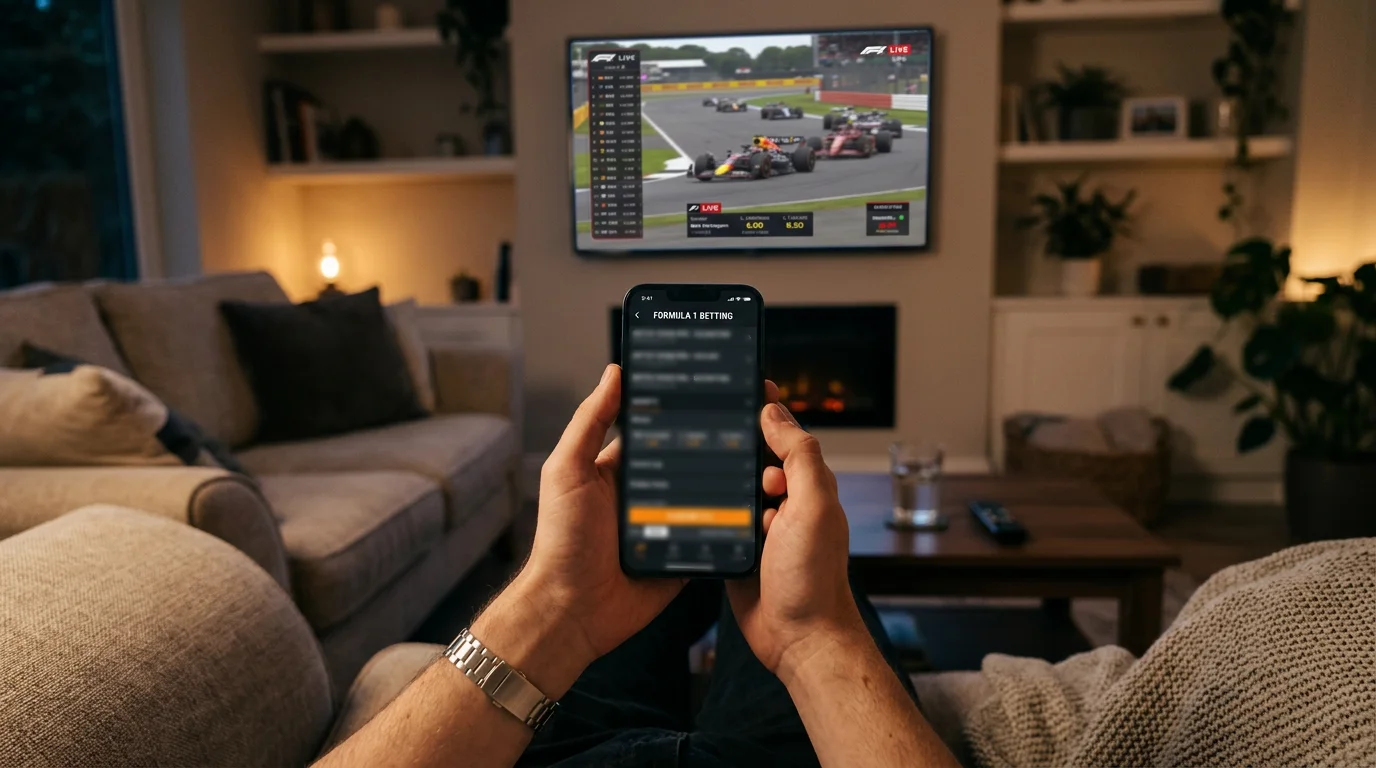
I made my worst-ever F1 bet on a mobile app in 2020. Not because the selection was bad – it was a live bet on a safety car deployment during the Tuscan Grand Prix at Mugello, and the safety car did appear – but because the app froze at the critical moment, the odds shifted while my bet was processing, and I ended up with a price 30% worse than the one I had tapped. That experience taught me something I now preach to every bettor I work with: the app is not a convenience layer on top of your strategy. It is part of your strategy. A slow, glitchy or poorly designed app will cost you money just as surely as a bad probability estimate.
The UK has 37.4 million active online gambling accounts, per Gambling Commission data – a 24% increase over pre-pandemic levels. A growing share of that activity flows through mobile. For F1, where in-play markets move in real time and betting windows can close in seconds, the mobile experience is not optional. It is the primary interface.
Feature Checklist for F1 Betting Apps
Not every feature matters equally. After testing F1 betting across multiple platforms over nine seasons, I have whittled the evaluation down to five features that actually affect your results rather than just your comfort.
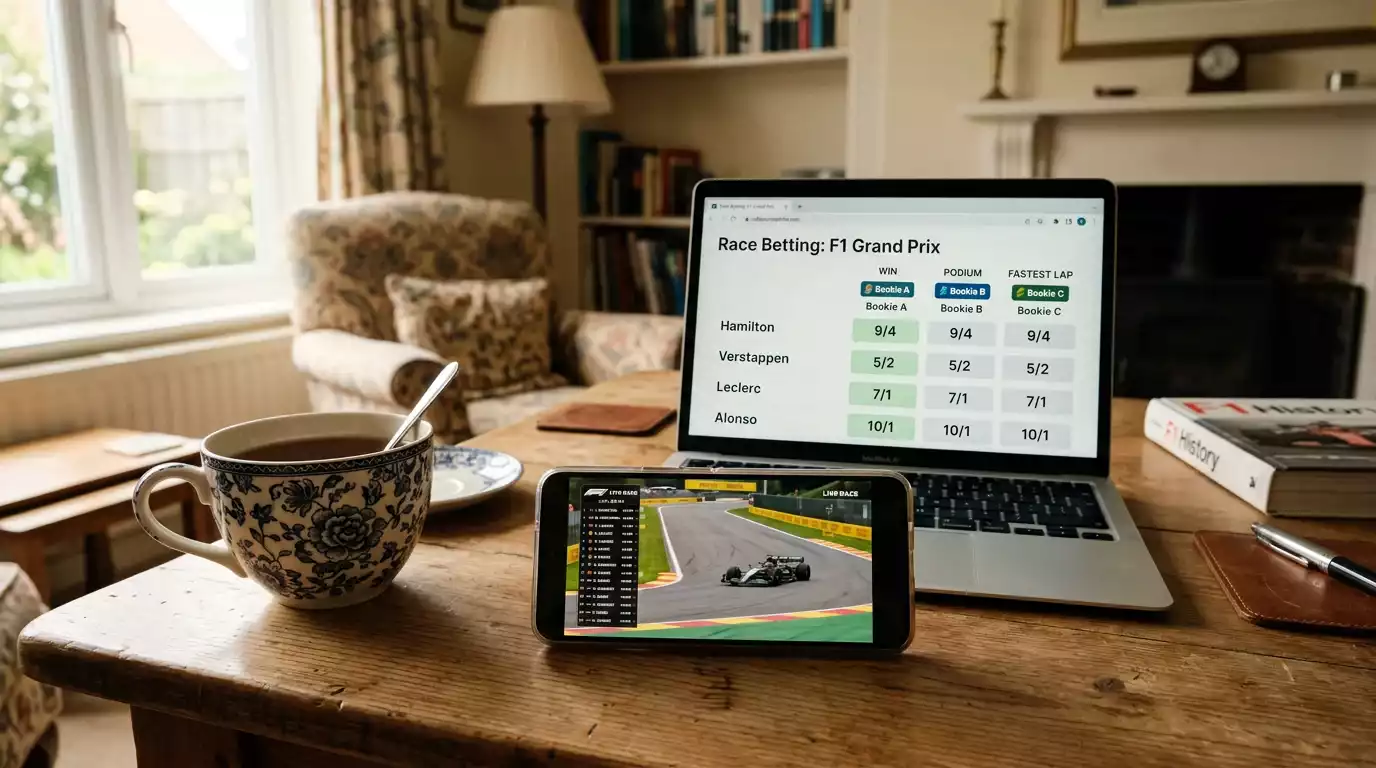
Market depth comes first. An app that offers race winner and championship outright but nothing else is useless for serious F1 betting. You need head-to-head matchups, podium finish, fastest lap, constructor bets, and – increasingly – granular in-play markets like next pit stop and gap-to-leader propositions. ALT Sports Data’s appointment as F1’s official betting data supplier is expanding the range of real-time markets available to operators, and the apps that integrate these new markets first gain a structural advantage.
Bet builder availability on mobile is non-negotiable for 2026. The feature allows you to combine multiple selections from a single Grand Prix into a custom bet. On desktop, building a bet builder is straightforward. On mobile, the user experience varies wildly – some apps bury the feature three menus deep, while others make it accessible from the main race page. An extra 15 seconds of navigation might seem trivial, but during qualifying or a race start, 15 seconds is the difference between catching a price and watching it evaporate.
Cash-out reliability matters more in F1 than in most sports. A Grand Prix lasts roughly 90 minutes, and the in-play odds can shift dramatically in the space of a single lap. If you are running a live bet and want to lock in profit during a safety car period, the cash-out function needs to execute immediately. An app that displays a cash-out value but then returns “price has changed” when you tap the button is functionally broken for F1 in-play purposes.
Push notification quality separates good apps from great ones. The best apps let you set alerts for specific drivers, specific markets and specific price thresholds. “Alert me when Driver X’s race winner odds go below 5.00” is a feature that lets you step away from the screen during practice sessions and return only when the market moves to a level you care about. Generic “bet now on the Grand Prix” notifications are marketing, not tools.
Live Odds Speed and Push Notifications
Live odds speed is the invisible variable. Two apps showing the same market on the same race can display prices that differ by 10-15% at any given moment during an in-play session, purely because one app refreshes faster than the other. The app showing the older price might look like better value – but by the time you tap it, that price may have already moved on the server side.
I tested odds refresh rates across several UK platforms during the 2025 season by comparing the time between an on-track event (safety car deployment, pit stop, overtake) and the corresponding odds adjustment appearing on screen. The variance was significant. The fastest platforms reflected major market events within three to five seconds. The slowest took 15 to 20 seconds – an eternity in live F1 betting, where the post-safety-car price adjustment can represent a 40-50% swing in implied probability.
Push notifications for odds movements are underused by most bettors. Setting a threshold alert – “notify me if Driver X drifts past 10/1 for the race win”, means you do not need to stare at the app during every practice session. The odds tell you when something interesting is happening. A drift from 8/1 to 12/1 between FP2 and qualifying might signal a setup problem, a gearbox penalty or simply soft money moving elsewhere. Either way, it is a trigger to investigate, and the push notification ensures you catch it.
Cash-Out and Partial Cash-Out on Mobile
Full cash-out closes your bet entirely, locking in either a profit or a reduced loss depending on how the race is unfolding. Partial cash-out lets you take some money off the table while leaving the rest of your bet active. The partial option is far more useful for F1, where races evolve over 50-plus laps and your initial assessment might be partially right, your driver is running third instead of first, but still in a scoring position.
The mechanics of cash-out are simple: the operator calculates the current fair value of your bet based on the live odds and offers you a settlement. The price they offer includes their margin, so you are always accepting a haircut relative to the theoretical value. That haircut is the cost of certainty, and in volatile F1 in-play markets, paying it can be entirely rational.
Timing your cash-out around pit windows is a technique I use regularly. If your race winner selection is leading but approaching their first pit stop, the cash-out value peaks just before the pit window opens, because the risk of an undercut or a slow stop has not yet materialised. Once the pit stop happens cleanly, the cash-out value adjusts upward. If it goes wrong, it drops sharply. Cashing out pre-pit locks in value at the point of maximum optimism.
Live Streaming Through Betting Apps
Some UK betting apps offer live streaming of F1 sessions, though the availability and quality vary by operator and by broadcaster licensing agreements. For punters who place live bets, having the race feed inside the same app as the bet slip creates a meaningful workflow advantage, you see the on-track action and the odds in the same viewport, which reduces reaction time on live plays.
The latency gap matters. Broadcast streams typically run five to fifteen seconds behind real time, while odds feeds can update in near-real-time based on official timing data. This means you might see the odds shift before you see the on-track event that caused the shift on the stream. Betting purely from the stream puts you at a structural disadvantage relative to the odds feed. The evaluation of UK F1 betting sites covers how different platforms handle this latency gap across their mobile and desktop products.
If streaming quality matters to your process, test it during a practice session before committing to live bets during the race. Stream quality that is acceptable during a low-traffic Friday practice session can degrade significantly during a Sunday race when server load peaks. Better to discover that during FP1 than during a crucial in-play bet on lap 40.
Can I watch F1 races live through a betting app?
Some UK-licensed betting apps offer live streaming of F1 sessions, but availability depends on the operator’s licensing agreements with broadcasters. Where available, the stream typically requires a funded account or a placed bet. Quality and latency vary, the stream may run several seconds behind the live odds feed, so relying solely on the stream for live betting decisions puts you at a timing disadvantage.
Which F1 betting apps have the fastest live odds updates?
Odds refresh speed varies between operators and is not publicly benchmarked. In practice, the fastest platforms reflect major on-track events, safety cars, pit stops, position changes, within three to five seconds, while slower platforms can take 15 seconds or more. Testing during a Friday practice session is the most reliable way to compare refresh speeds before committing to in-play bets during the race.
Prepared by the f1 Betting Guide editorial staff.