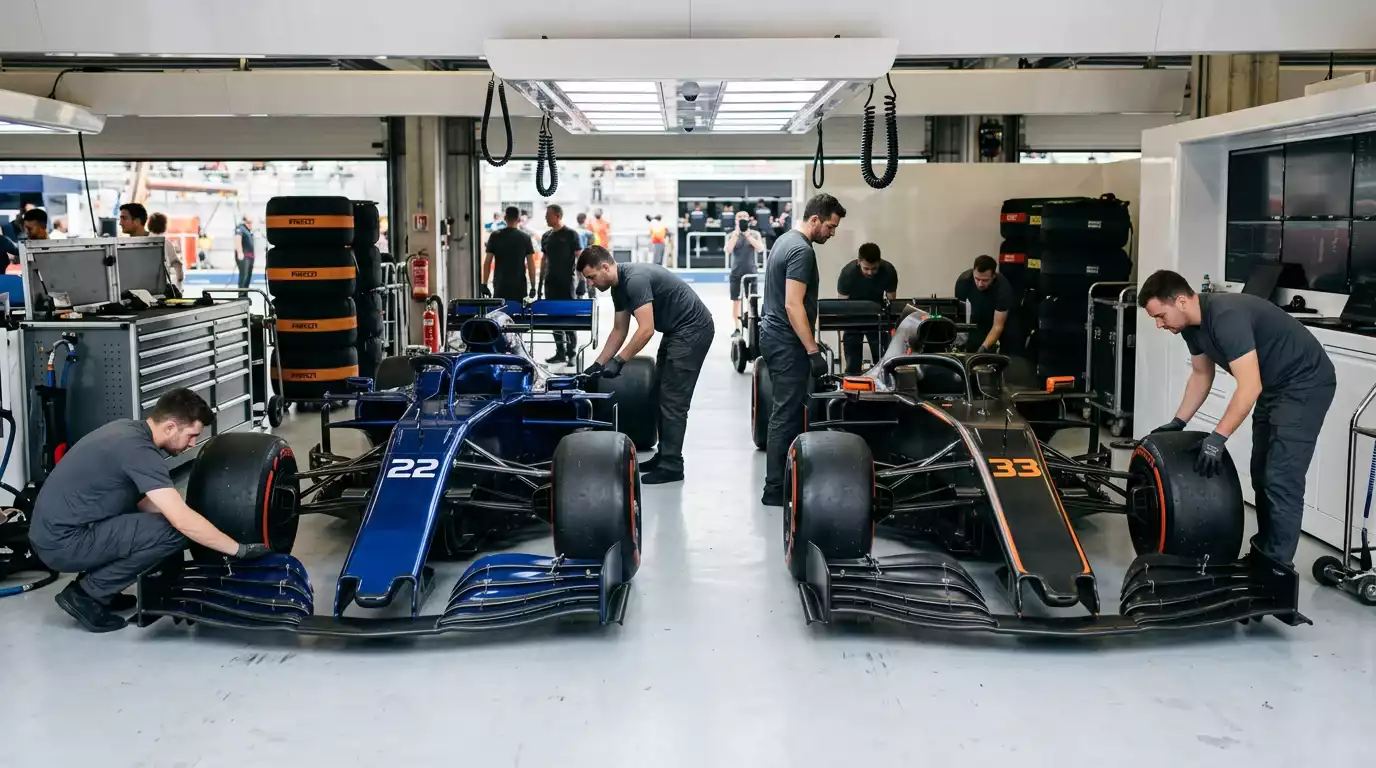
F1 Live Betting: In-Play Markets, Timing and Real-Time Strategy
 Available in US
Table of Contents
- How F1 In-Play Markets Work
- How Real-Time Data Is Changing In-Play F1 Odds
- The Safety Car Trigger: How Odds React to Yellow Flags
- Pit Windows and Tyre Strategy as Live Betting Signals
- Cash-Out Timing During a Grand Prix
- Pre-Race vs In-Play: When Each Approach Works Better
- Discipline and Bankroll Control in Live F1 Markets
- Common Questions About F1 Live Betting
Lap 32 of the 2024 Dutch Grand Prix. The leader pits from a comfortable gap, drops to fourth, and within ninety seconds his race winner odds swing from 1/6 to 5/2. I had been watching tyre degradation data all race and saw the undercut window closing – the driver behind stayed out, inherited the lead, and the entire market repriced around a strategic gamble that lasted less than two minutes. That is F1 live betting: fast, data-rich, and brutally unforgiving if you are not prepared. See also: f1 betting guide for the full range of race-day factors.
In-play betting on Formula 1 is still in its adolescence. The market infrastructure exists (most major UK bookmakers offer live odds during races) but the product is evolving rapidly. Betfair alone processed an estimated $200 million in F1 betting volume in 2023, and total turnover on F1 driver futures grew from $36 million to $45 million between 2023 and 2024, per Sparkco’s market analysis. A growing share of that volume is flowing into in-play markets as the technology improves. ALT Sports Data was appointed as F1’s official betting data supplier in February 2025 to develop real-time predictive analytics and priced odds based on actual race telemetry. Jonny Haworth, F1’s commercial partnerships director, has spoken about working to develop a betting product that uses the sport’s data to enable engagement beyond simple outcome betting. That transformation is underway right now, and the punters who understand live F1 betting before the new markets launch will have a significant head start.
This guide covers how in-play F1 markets work today, the real-time triggers that move odds during a race, and the discipline required to bet live without haemorrhaging your bankroll.
How F1 In-Play Markets Work
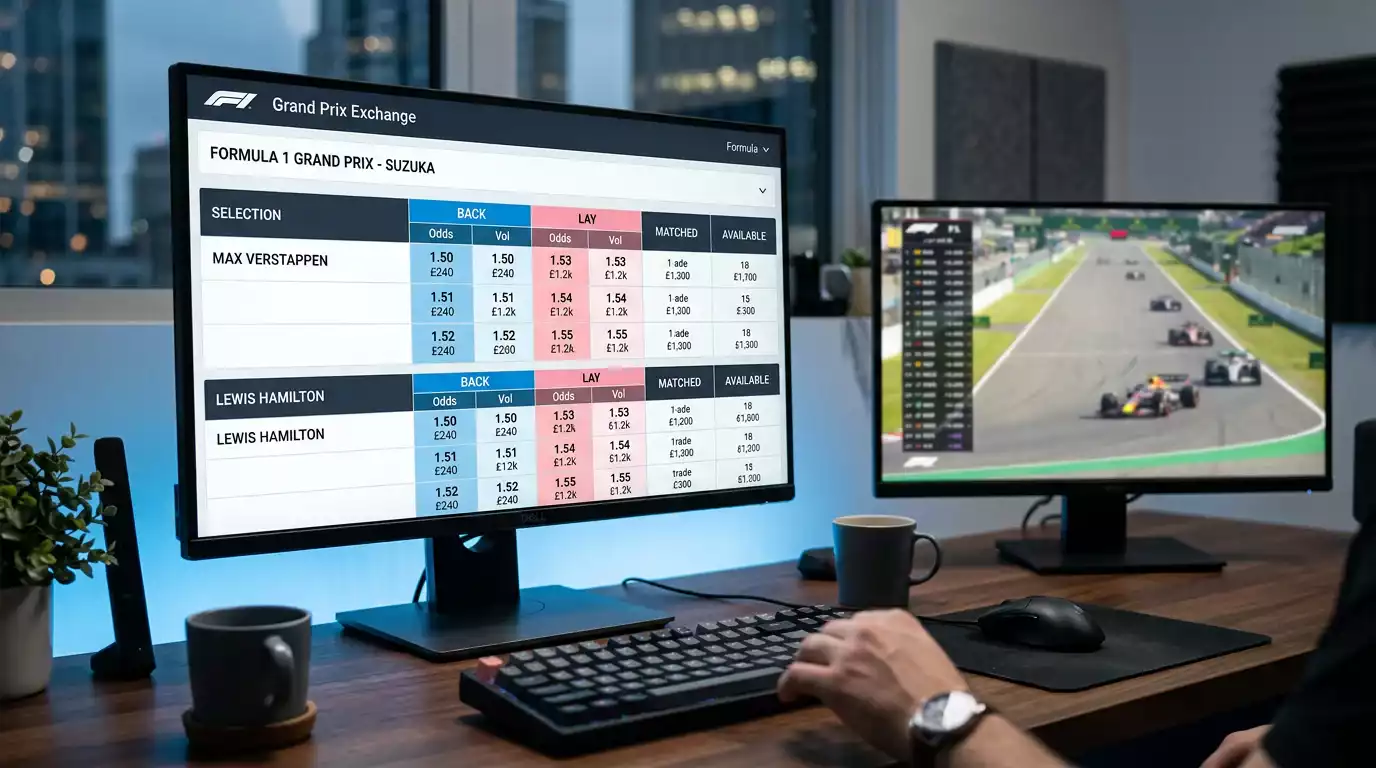
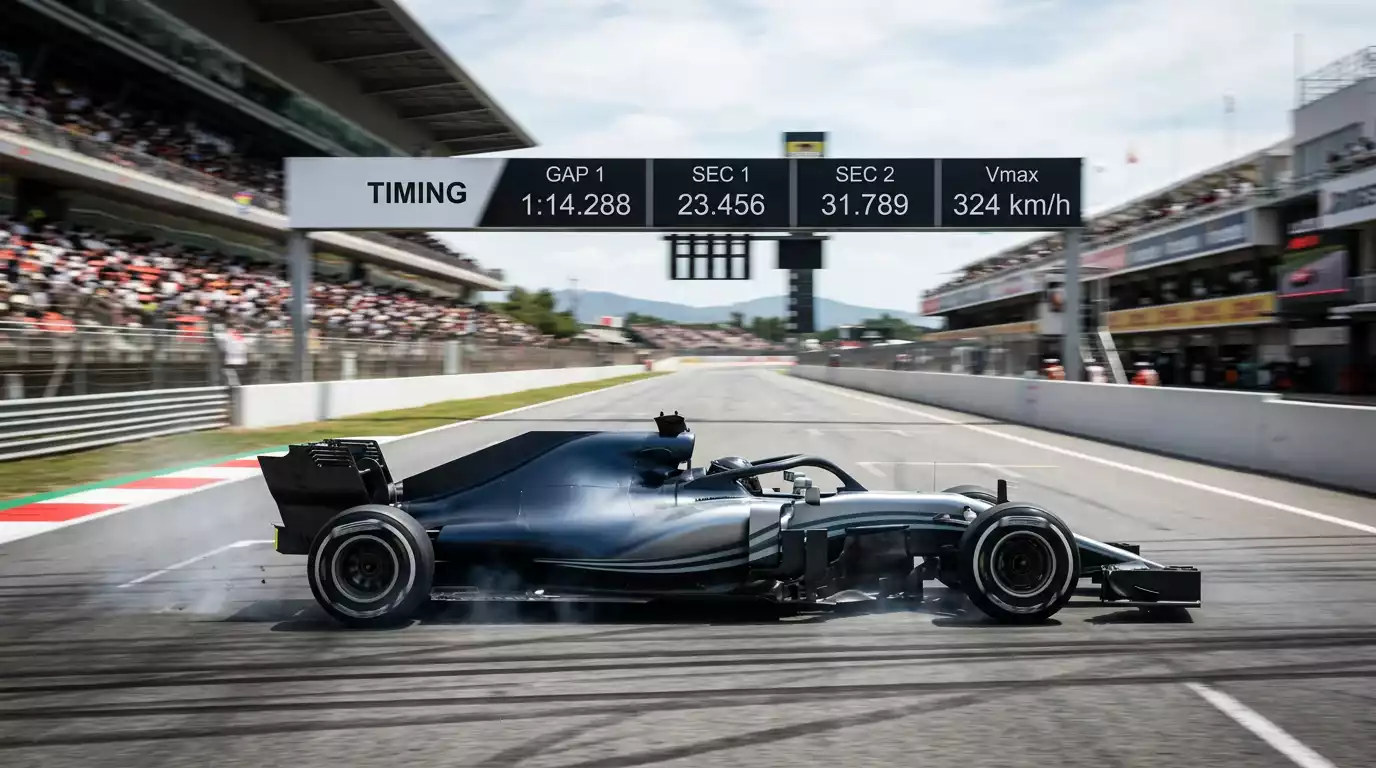
Live F1 markets operate on a fundamentally different rhythm than pre-race betting. Before the race, odds adjust gradually over days, responding to practice data, qualifying results, weather forecasts. Once the lights go out, odds adjust in seconds, driven by positional changes, pit stops, incidents, and the real-time gap data that every viewer can see on the broadcast timing screen.
The most common in-play markets mirror the pre-race offering: race winner, podium finish, fastest lap, and head-to-head matchups. But the pricing is dynamic. A driver running second with a two-second gap to the leader might be offered at 3/1 for the race win. If that gap closes to under a second over two laps, the price shortens to 2/1. If the leader pulls away again, it drifts back. Every lap changes the picture.
Bookmakers suspend live F1 markets during periods of high uncertainty: safety car deployments, red flags, pit stop windows where multiple cars are entering the lane simultaneously. The suspension typically lasts thirty seconds to two minutes, after which the market reopens with repriced odds that reflect the new situation. This suspension window is important: it means you cannot always act on the information you have in real time. Speed matters, but so does anticipation – getting your bet placed before the triggering event, not after.
Liquidity in live F1 markets is thinner than in pre-race betting. Bookmakers accept smaller stakes during races, particularly on less popular markets like fastest lap or constructor bets. If you are planning a significant in-play wager, check the maximum stake your bookmaker accepts before the race starts. There is nothing more frustrating than identifying a value position and discovering you can only stake a fraction of what you intended.
One structural limitation of current F1 live betting: most bookmakers still price primarily off positional data and gap times. They do not yet fully incorporate tyre compound information, fuel load estimates, or pit stop strategy predictions into their live models. This creates an edge for punters who can read the strategic picture in real time – which is exactly the advantage that the new generation of data-driven markets is designed to capture.
The timing of your in-play bet matters enormously. Odds are most volatile, and most mispriced, in the opening five laps and immediately after pit stop sequences. The opening laps produce first-corner incidents, early overtakes, and initial tyre performance data that reshuffles the market. The pit stop phase, typically between laps 15 and 25 at most circuits, creates a cascade of positional changes as drivers cycle through the pit lane at different moments. Between these two windows, the market tends to settle into a rhythm where mispricing is harder to find. I concentrate my in-play activity in those two volatile windows and watch passively during the quieter phases.
How Real-Time Data Is Changing In-Play F1 Odds
The appointment of ALT Sports Data as F1’s official betting data supplier marks a genuine inflection point for live F1 betting. Until now, bookmakers have priced in-play markets using the same publicly available data that any viewer can see on the broadcast – positions, gaps, lap times. ALT’s mandate is to go deeper, using F1’s proprietary telemetry feeds to generate predictive models that power entirely new market types.
Emily Prazer, F1’s Chief Commercial Officer, described the partnership as part of the sport’s commitment to delivering new ways for audiences to engage. Jonny Haworth has been more specific about what that looks like in practice: models that predict which driver will pit next, who will win a specific on-track battle over the next ten laps, and real-time probability estimates for strategic outcomes that currently exist only in team engineers’ heads.
For the punter, this means two things. First, the markets themselves will become richer: more granular, more frequent, and more directly tied to the strategic narrative of the race. Instead of betting on the race winner at lap 20 and waiting 40 laps for the result, you might bet on whether a driver will successfully complete an undercut in the next pit window, with settlement in five laps. Second, the pricing will become more sophisticated, which paradoxically benefits informed bettors. When the market model is better, the mispricing that does occur is more likely to be found by someone with genuine domain expertise – someone who understands tyre degradation curves or can read a driver’s radio communication to gauge their strategic intent.
These markets are not fully live yet at most UK bookmakers, but the infrastructure is being built. If you are serious about F1 live betting, familiarise yourself now with safety car probability and its betting implications – the learning curve will be steep once the new products launch, and early adopters will have an advantage.
The Safety Car Trigger: How Odds React to Yellow Flags
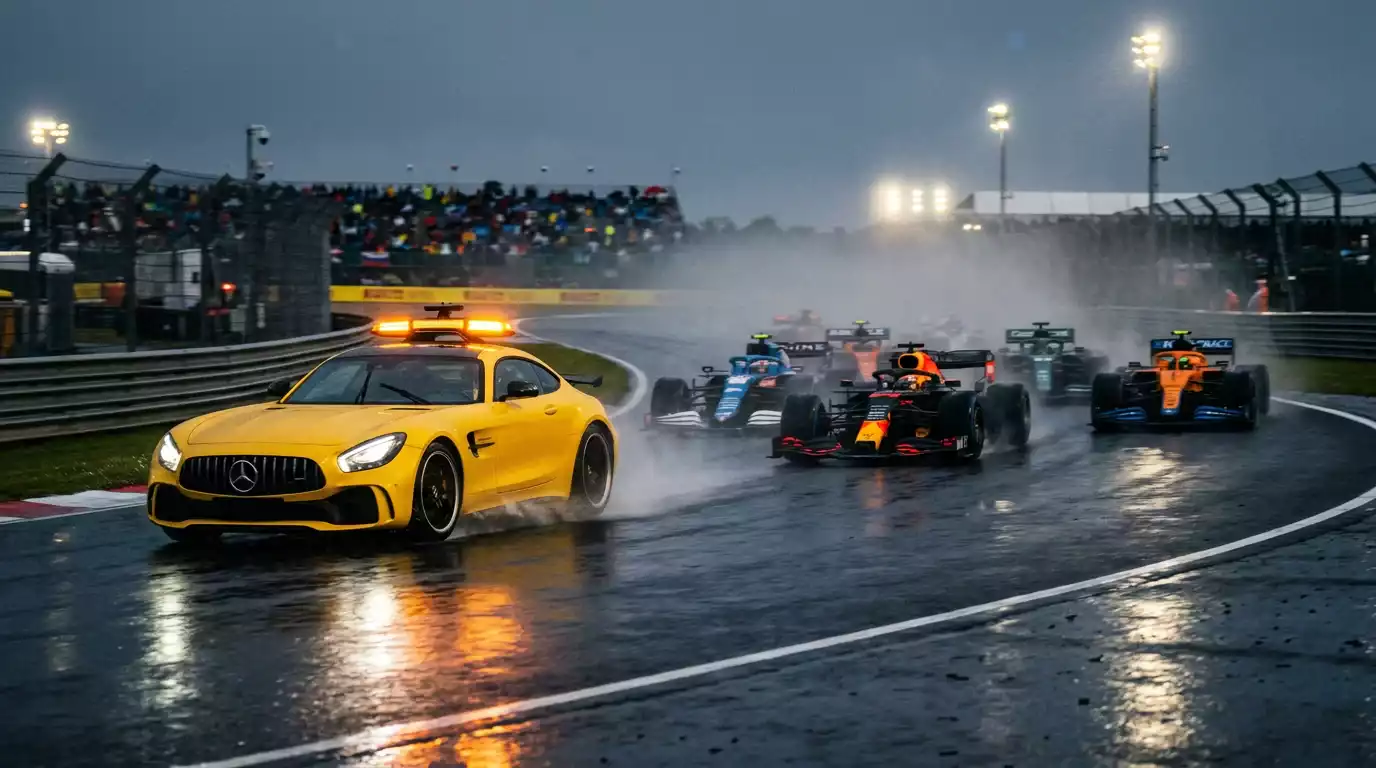
Nothing reshapes an F1 live betting market faster than a safety car. The field bunches up, gaps evaporate, and drivers who were running comfortably in the lead suddenly have rivals on their gearbox with fresh tyres and nothing to lose. I have seen race winner odds shift from 1/10 to 2/1 in the time it takes the safety car to complete its first lap.
The mechanism is straightforward: a safety car neutralises the race, eliminates time gaps, and creates a restart where anything can happen. Drivers on older tyres are vulnerable. Drivers who pitted under the safety car have a strategic advantage. The entire competitive picture resets, and the bookmaker must reprice accordingly.
For live bettors, the key is not reacting to the safety car – it is anticipating it. Safety car deployment probability varies dramatically by circuit. Street circuits with concrete walls produce safety cars far more frequently than wide-open permanent circuits with generous run-off areas. If you are betting live at Baku or Singapore, you should already have a plan for what happens when the safety car comes out. Who benefits from a restart? Who is on older tyres? Who is in a position to pit under the safety car without losing track position?
The Virtual Safety Car adds another layer. The VSC slows the entire field to a delta time without bunching them up, so gap advantages are largely preserved. The live market reaction to a VSC is much smaller than a full safety car: odds might shift by 10-15% rather than the 50%+ swings a full safety car produces. Knowing the difference matters, because a VSC often creates a false opportunity: odds drift slightly on the leader, but their advantage is not genuinely threatened.
Red flags are the extreme case. When the race is stopped entirely (a severe crash, dangerous track conditions, or an obstruction that cannot be cleared under safety car) the entire grid resets. Drivers can change tyres, teams can repair minor damage, and the restart is essentially a standing start or rolling start from the grid order at the time of the stoppage. Red flags have produced some of the most dramatic F1 results in recent memory, and the live odds after a red flag restart reflect near-total uncertainty. If you have strong views on who benefits from a clean restart on fresh tyres, a red flag can be the highest-value moment in live F1 betting.
Pit Windows and Tyre Strategy as Live Betting Signals
The pit window – the range of laps where a driver is expected to make their tyre stop – is the single most actionable piece of strategic information for live F1 betting. When a driver enters the pit lane, they lose roughly 20-25 seconds depending on the circuit. If a rival stays out and gains track position, the entire competitive picture changes. Live odds reflect this instantly.
Reading the pit window requires understanding tyre degradation data from earlier in the race. If a driver started on soft compound tyres and the expected life of those tyres at this circuit is 18-22 laps, the pit window opens around lap 16. As that window approaches, the probability of a pit stop rises, and the live odds begin to price in the strategic possibilities. Will the driver pit early for an undercut? Will they extend their stint to overcut? Will a safety car intervene and give them a free stop?
The undercut – pitting one or two laps before a rival to gain time on fresh tyres and emerge ahead – is the most common strategic weapon in F1. When an undercut is likely, the odds on the driver behind often shorten in the laps before the pit window, because the market anticipates them gaining track position. If you can identify an undercut opportunity before the bookmaker prices it in, backing the undercutting driver in a head-to-head market or podium bet is a high-probability play.
The overcut – staying out while a rival pits, then benefiting from clear air and a lighter fuel load before pitting yourself – is riskier but can produce bigger odds swings. An overcut typically works only when the track surface rubbered in during the session generates enough grip advantage to offset the tyre age disadvantage. It is harder to predict, but when it works, the odds movement is dramatic because the market rarely expects it.
Cash-Out Timing During a Grand Prix
Cash-out is simultaneously the most useful and most dangerous tool in live F1 betting. The concept is simple: at any point during the race, you can close your bet early at a price the bookmaker calculates based on the current odds. If your selection is winning, the cash-out value will be positive but less than the full potential return. If your selection is losing, the cash-out value will be less than your stake – the bookmaker is offering you a chance to recover some of your money rather than risk a total loss.
The question of when to cash out is context-dependent. I have a personal rule: I only cash out when the strategic picture has fundamentally changed from my pre-race assessment. If I backed a driver for the podium based on their race pace advantage and a safety car has neutralised that advantage, I will consider cashing out because the basis for my bet has been undermined. If the same driver drops from second to third but their pace advantage is intact, I hold – the bet is still sound.
The bookmaker profits from cash-out because they apply a margin to the offer. The cash-out value is always slightly worse than the “fair” value of your position. Over many cash-outs, this margin erodes your returns. I use cash-out sparingly – perhaps two or three times per season – and only when my original thesis is genuinely invalidated.
Partial cash-out, where you lock in a portion of your profit and leave the rest running, is a better tool for live F1 betting. If your driver is leading at half distance and your pre-race bet is well in profit, cashing out 50% secures a guaranteed return while leaving the other half exposed to the possibility of an even larger payout if they hold on. This approach suits the inherent volatility of F1, where a race can change in a single lap.
There is also a psychological dimension to cash-out that is worth acknowledging. Watching a profitable position evaporate because you held on feels worse than the satisfaction of an equivalent win. Loss aversion is hardwired, and bookmakers design cash-out features to exploit it – the flashing green profit number on your screen is deliberately attention-grabbing. Being aware of this design choice does not eliminate its effect, but it does give you a framework for questioning whether your urge to cash out is strategic or emotional. If the answer is emotional, I close the app and watch the race on the television instead.
Pre-Race vs In-Play: When Each Approach Works Better
A question I get asked constantly: should I bet before the race or during it? The answer depends on your information advantage and your temperament.
Pre-race betting rewards thorough preparation. You have time to analyse practice data, check weather forecasts, assess tyre strategies, and compare odds across bookmakers without time pressure. The prices are generally more generous because the uncertainty is higher – the bookmaker is pricing without knowing what will happen in the opening laps, and that uncertainty works in your favour if your analysis is sound. Betting volume on F1 driver futures reached roughly $45 million in 2024, and the majority of that volume flows into markets before the race starts.
In-play betting rewards real-time pattern recognition and fast decision-making. You can see how the race is unfolding, how tyre wear is affecting pace, and whether the strategic picture matches expectations. The prices are tighter because the uncertainty is lower, but the information advantage can be larger – if you spot a developing undercut opportunity or a driver struggling with degradation before the market adjusts, the edge is immediate and actionable.
My split is roughly 70% pre-race, 30% in-play. The pre-race bets are my core positions: head-to-heads and podium finishes based on practice data analysis. The in-play bets are opportunistic: situations where the race dynamics have created a mispricing that my pre-race analysis helps me recognise. I never place an in-play bet that I had not at least considered as a possibility before the race started.
Discipline and Bankroll Control in Live F1 Markets
Live betting is where bankroll management breaks down for most punters. The speed of the action, the emotional intensity of watching a race, and the constant availability of new markets create a dangerous combination. YouGov data shows that 31% of motorsport bettors spend over $100 per month on betting and fantasy – higher than any other major sport’s fanbase. In-play betting accounts for a disproportionate share of that spending, because the temptation to “just place one more” during a live race is relentless.
My live betting rules are rigid. First: a pre-race budget. Before every Grand Prix, I decide exactly how much of my bankroll I am willing to allocate to in-play bets. This number is typically 2-3 units, regardless of what happens during the race. If I use all three units by lap 15, I watch the rest of the race as a spectator. No exceptions.
Second: no chasing. If my pre-race bet is losing and I am tempted to place an in-play bet to “recover” the loss, I stop myself. That impulse is not strategy; it is emotion masquerading as analysis. The pre-race bet was based on pre-race information, and the fact that it is not going well does not mean a hastily constructed in-play bet will perform better.
Third: pre-written triggers. Before the race, I write down two or three specific scenarios that would justify an in-play bet. “If Driver X pits before lap 15 and emerges behind Driver Y, back Driver Y in the head-to-head at odds above 2/1.” Having the trigger pre-defined removes the need for split-second decision-making during the race, which is when mistakes happen.
The goal is to make live F1 betting systematic rather than reactive. The race is exciting. The market is moving. Every lap brings new information. But the punter who makes money from live betting is the one who has done most of the thinking before the lights went out. See also: plan your seasonal bets with our F1 season specials overview.
Common Questions About F1 Live Betting
How fast do F1 in-play odds change after a safety car?
Race winner odds can shift by 50% or more within sixty seconds of a safety car deployment. The field bunches up, time gaps are eliminated, and drivers on older tyres become vulnerable to those who pit under the safety car for fresh rubber. Bookmakers typically suspend the market briefly during the safety car period and reopen with repriced odds once the situation stabilises. The Virtual Safety Car produces smaller movements – usually 10-15% – because gaps are largely preserved.
What new in-play markets are coming from ALT Sports Data?
ALT Sports Data, F1’s official betting data supplier since February 2025, is developing real-time predictive models that will power markets beyond traditional outcome betting. These include predictions on which driver will pit next, who will win a specific on-track battle in the next ten laps, and probability estimates for strategic outcomes like successful undercuts. The timing of full rollout varies by bookmaker, but the infrastructure is being built now.
Is cashing out during an F1 race worth it?
Only when the strategic basis for your original bet has fundamentally changed – not because you are nervous. The bookmaker applies a margin to every cash-out offer, so frequent cashing out erodes your returns over time. Partial cash-out, where you lock in a portion of your profit and leave the rest running, is a more effective approach for managing risk during a volatile race without surrendering all your upside.
Published by the f1 Betting Guide team.